
The nightmares won’t stop. Your heart races at sounds that shouldn’t frighten you. You feel disconnected from people you love, and some days it takes everything you have just to get through basic tasks without falling apart.
If this sounds familiar, you’re not alone. Post-traumatic stress disorder affects millions of people who’ve experienced or witnessed traumatic events, from combat and assault to accidents and childhood abuse. The symptoms can be devastating, but here’s what many people don’t realize: nearly half of those living with PTSD also struggle with substance use disorders. That connection isn’t coincidence or weakness. It’s your brain trying to cope with unbearable experiences.
Sarah, a 34-year-old nurse, spent three years not understanding why she couldn’t shake the images from a violent car accident she witnessed. “I thought I was just stressed,” she recalls. “I started drinking more to sleep, then to get through the day. I didn’t connect the dots until my hands were shaking and I couldn’t remember the last time I felt safe.”
Recognizing PTSD symptoms is the first step toward reclaiming your life. The diagnostic criteria have evolved, and understanding them can help you identify whether what you’re experiencing goes beyond normal stress responses. This isn’t about labeling yourself. It’s about getting the right help, especially if you’ve turned to alcohol, drugs, or other substances to manage symptoms you didn’t have words for.
You deserve to know what’s happening in your mind and body. More importantly, you deserve to know that effective treatment exists for both PTSD and co-occurring addiction.
Why PTSD and Addiction Often Go Hand-in-Hand
Trauma and substance use create a vicious cycle that feeds on itself. If you’ve lived through a traumatic event, whether it’s combat, assault, a serious accident, or childhood abuse, the emotional pain can feel unbearable. Your brain keeps replaying what happened. You can’t sleep. You’re constantly on edge, waiting for the next bad thing. That’s when substances start to look like the only relief available.
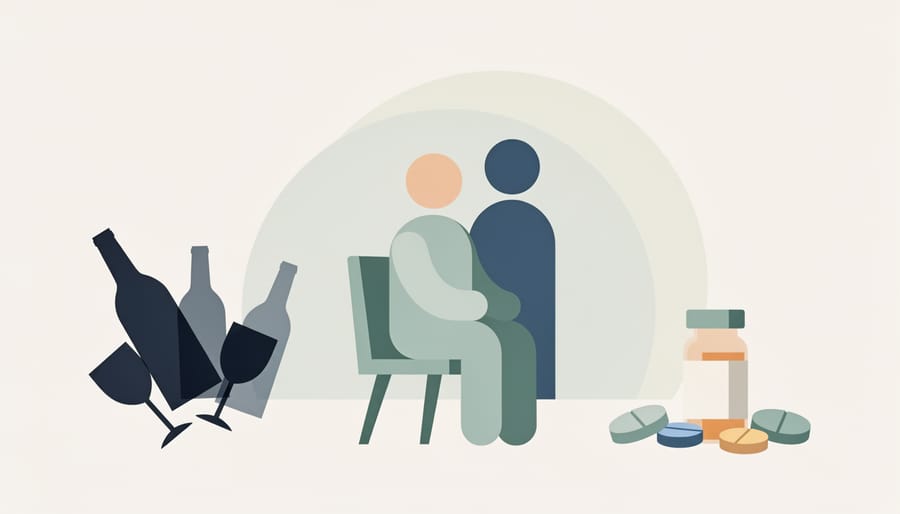
Alcohol and drugs can temporarily numb those feelings. They quiet the intrusive memories, ease the hypervigilance, and let you sleep for a few hours. For someone struggling with untreated PTSD symptoms, that relief feels like survival. The problem is that what starts as self-medication quickly becomes its own problem. Tolerance builds, dependence develops, and before long, you’re dealing with addiction on top of the original trauma.
This relationship runs both ways. Substance use doesn’t just follow trauma, it can create new traumatic experiences. People struggling with addiction are statistically more likely to be exposed to dangerous situations: violent relationships, accidents, overdoses, and situations where you witness harm to others. Each new trauma adds layers to the original wound, making recovery from either condition that much harder.
Research consistently shows that PTSD and substance use disorders overlap at staggering rates. Veterans, survivors of sexual assault, and people with childhood trauma histories are all at higher risk for developing both conditions. When they occur together, each makes the other worse. The trauma symptoms drive continued substance use, while the substances interfere with your brain’s natural ability to process and heal from trauma.
That’s why integrated treatment matters so much. You can’t successfully treat one while ignoring the other. Addressing both simultaneously, with providers who understand the connection, gives you the best chance at lasting recovery.
What PTSD Actually Is (And When Symptoms Start)
PTSD is a mental health condition that can develop after you experience or witness a traumatic event. It’s not weakness, and it’s not something you can just snap out of. Your brain has essentially gotten stuck in survival mode, replaying the threat long after the danger has passed.
Here’s what makes PTSD different from normal stress reactions: the symptoms don’t fade as time goes on. Most people feel shaken after something frightening happens. That’s expected. But with PTSD, the intrusive memories, avoidance behaviors, mood changes, and constant sense of danger persist for more than a month and often intensify rather than improve.
The timeline matters. PTSD symptoms typically emerge at least one month later though sometimes they surface months or even years after the event. You might think you’ve moved on, then suddenly find yourself overwhelmed by symptoms that seem to come out of nowhere.
What counts as a traumatic event? It involves a serious threat to your life or physical safety. This includes physical assault, sexual violence, serious accidents, combat exposure, witnessing someone’s death or serious injury, or learning about a violent death of someone close to you. Childhood abuse qualifies. So does ongoing domestic violence. For many people in recovery, the trauma that triggered their PTSD happened during active addiction or contributed to it in the first place.
You don’t need to have been directly harmed. Witnessing violence or repeatedly hearing graphic details about traumatic events can also lead to PTSD, which is why first responders and healthcare workers experience it at higher rates.
The key takeaway: if you’ve been through something terrifying and your symptoms aren’t getting better with time, that’s PTSD trying to get your attention.
The Four Main Categories of PTSD Symptoms You Need to Know

Intrusive Memories and Flashbacks
Intrusive memories show up uninvited, often when you least expect them. You might be standing in line at the grocery store or sitting at a stoplight when suddenly you’re right back in that moment, the accident, the assault, the loss. It’s not just remembering. It feels like it’s happening again, right now, with the same fear and physical reactions you had during the original event.
Flashbacks are the most intense version of this. Your brain temporarily loses track of the present. You might see, hear, or smell details from the trauma as if they’re real and immediate. Some people describe it as watching a movie that won’t stop playing. Others say it’s like being pulled underwater with no control over when you’ll surface. These episodes can last seconds or stretch into minutes, and they leave you shaken and exhausted.
Nightmares bring the trauma into your sleep. You wake up drenched in sweat, heart pounding, unable to fall back asleep because you’re afraid the dream will pick up where it left off. Over time, the fear of nightmares can make you avoid sleep altogether, which creates its own cascade of problems.
Then there are the distressing thoughts that circle back constantly. You replay what happened, questioning what you could have done differently. Your mind won’t let it rest. These thoughts interrupt your concentration at work, pull you out of conversations with loved ones, and make it hard to be present in your own life.
What makes intrusive symptoms especially difficult is their unpredictability. You can’t control when they strike, which means you’re always bracing for the next one. This constant vigilance is exhausting and often drives people toward substances that promise, even temporarily, to turn down the volume on these relentless reminders.

Avoidance: When You Go Out of Your Way to Forget
Avoidance is one of the most powerful and sneaky PTSD symptoms because it feels like self-preservation. You’re not trying to make your life smaller, you’re trying to protect yourself from the overwhelming feelings that certain reminders trigger. But over time, this protection becomes a prison.
You might find yourself refusing to drive past the neighborhood where something terrible happened, even if it adds an hour to your commute. You avoid certain friends because they were there that night, or you can’t watch TV shows with themes that hit too close to home. Some people quit jobs, end relationships, or move to different cities trying to outrun the memories.
What makes avoidance especially damaging is how it spreads. It starts with dodging one specific trigger, then expands to anything remotely connected. You stop going to family gatherings because someone might ask questions. You delete photos. You change the subject every time the topic comes up, leaving the people who care about you confused and shut out.
This isn’t weakness or overreaction. It’s your brain trying to keep you safe from perceived threats. But the cost is real: isolation, missed experiences, and relationships that fade because you can’t explain why you’ve become unreachable. When avoidance teams up with substance use, numbing instead of facing, the cycle becomes even harder to break. Recognizing this pattern is the first step toward getting your life back.
Negative Changes in Thinking and Mood
This symptom cluster can feel like living under a dark cloud that never lifts. You might notice persistent negative beliefs about yourself, thoughts like “I’m broken,” “I can’t trust anyone,” or “the world is completely dangerous.” These aren’t just occasional bad moods; they’re ongoing patterns of thinking that color everything you experience.
Guilt and shame often take center stage, even when the trauma wasn’t your fault. You might blame yourself for what happened, for how you reacted, or for not being able to “just get over it.” Some people experience survivor’s guilt if others were hurt worse or didn’t survive the same event. The self-blame can become relentless.
You might also feel emotionally numb or detached from people you once felt close to. It’s not that you don’t care about your partner, kids, or best friend anymore, you just can’t access those warm feelings. Positive emotions like joy, love, or satisfaction feel out of reach, even during moments that should be happy. You go through the motions but feel hollow inside.
This emotional flatness often gets confused with depression, and there’s significant overlap. Both conditions can involve loss of interest in activities, feelings of hopelessness, and difficulty connecting with others. The key difference is that these PTSD-related mood changes stem directly from the trauma and often exist alongside the other symptom clusters, the intrusive memories, avoidance behaviors, and constant sense of threat.
If you’re in recovery, you might recognize this numbness as what you were trying to escape when you used substances in the first place. Understanding that these are trauma symptoms, not character flaws, is crucial.

Being Constantly On Edge: Hyperarousal Symptoms
Living with hyperarousal feels like your body’s alarm system got stuck in the “on” position. You can’t relax because your nervous system genuinely believes danger is around every corner, even when you’re safe at home.
Hypervigilance means constantly scanning your environment for threats. You notice everything: who walked into the room, where the exits are, any unexpected noise. At a restaurant, you might need to sit with your back to the wall. In a store, you’re tracking everyone’s movements. It’s exhausting because your brain never gets to rest.
You’ll startle at things that wouldn’t faze most people. A door closing, someone tapping your shoulder, a car backfiring, these can trigger an immediate, intense physical reaction. Your heart races, you might jump or flinch, and it takes real time to calm back down. People around you might not understand why you reacted so strongly to something “small.”
Irritability and angry outbursts often catch you off guard. You snap at loved ones over minor things, lose your temper faster than you used to, or feel a simmering frustration you can’t shake. This isn’t about being a bad person. It’s your nervous system operating in crisis mode, interpreting everyday annoyances as threats.
Concentration becomes nearly impossible when your mind is constantly monitoring for danger. You’ll read the same paragraph three times, lose track of conversations, or forget what you walked into a room to do.
Sleep problems are particularly brutal. You might struggle to fall asleep because you can’t quiet your mind, wake repeatedly through the night, or jolt awake from nightmares. Even when you do sleep, you don’t feel rested because your body stayed partially alert the whole time.
This constant state of readiness drains you physically and emotionally, making everything harder than it needs to be.
PTSD Symptoms That Often Get Mistaken for Something Else
PTSD symptoms often don’t announce themselves as trauma. Instead, they masquerade as conditions you might already recognize, or worse, as personality flaws you blame yourself for.
Many people spend years treating what looks like generalized anxiety disorder, never realizing their constant worry and panic attacks stem from unresolved trauma. Your doctor might diagnose depression when the real issue is the emotional numbness and hopelessness that follow a traumatic event. The symptoms overlap enough that even healthcare providers can miss the underlying cause if they don’t ask the right questions about your history.
This misidentification happens especially often when you don’t recognize your experience as traumatic. You might think, “Other people had it worse,” or “It happened years ago, so it shouldn’t still bother me.” But trauma isn’t a competition, and your brain doesn’t operate on a statute of limitations.
You might chalk up your sleep problems to stress. Your irritability gets blamed on work pressure. You convince yourself that avoiding certain places or people is just a preference, not a pattern. Meanwhile, the hypervigilance you feel walking into crowded spaces seems like simple caution, not a symptom that warrants attention.
The danger in these misdiagnoses is that they lead to incomplete treatment. Antidepressants might take the edge off, but they won’t fully address PTSD symptoms. Anxiety management techniques help, yet they don’t resolve the core trauma. When treatment doesn’t work as expected, you might assume something is wrong with you rather than questioning whether you’re treating the right condition.
If you’ve been managing what feels like chronic anxiety or depression for months or years without real improvement, it’s worth revisiting your history with a trauma-informed lens.
When Self-Medication Becomes the Problem
When Sarah finally checked into rehab at 32, she told her counselor the nightmares started six months after the car accident that killed her best friend. She didn’t mention she’d been drinking herself to sleep every night for three years because, as she put it, “the vodka was the only thing that turned off the loop in my head.” What she discovered in treatment was that her alcohol dependence wasn’t a separate problem from her PTSD, it was her brain’s desperate attempt to survive the symptoms no one had helped her name.
Using alcohol or drugs to manage PTSD symptoms makes complete sense in the moment. When intrusive memories hit in the middle of the afternoon, when you can’t sleep without reliving the trauma, when you’re so on edge that your hands shake at loud noises, substances offer immediate, reliable relief. A drink quiets the hypervigilance. Pills numb the guilt and emotional numbness becomes tolerable numbness. For a few hours, you get a break from the exhausting work of being terrified in your own mind. This isn’t a moral failing or weakness. It’s a survival strategy your brain latches onto because the pain is real and the relief, however temporary, feels like the only option you have.
The problem is that self-medication creates its own trauma cycle. Alcohol and many drugs disrupt REM sleep, which means the nightmares often get worse over time. Substances interfere with your brain’s natural ability to process traumatic memories, essentially freezing you in the trauma rather than helping you move through it. Tolerance builds, so you need more to get the same relief, and suddenly you’re dealing with withdrawal symptoms that mirror PTSD, anxiety, irritability, insomnia, difficulty concentrating. When the substances wear off, the PTSD symptoms roar back, often more intensely than before. You’re caught in a tightening spiral where each condition fuels the other, and the coping mechanism that once helped has become another source of distress you can’t escape.
How PTSD Is Actually Diagnosed in 2026
Getting a PTSD diagnosis isn’t as intimidating as you might think. There’s no single blood test or brain scan that confirms it. Instead, a healthcare provider (usually a psychiatrist, psychologist, or primary care doctor with mental health training) will have an in-depth conversation with you about what you’ve experienced and how it’s affecting your life now.
The diagnosis follows criteria outlined in the Diagnostic and Statistical Manual of Mental Disorders, 5th edition, text revision. Your provider will ask about the traumatic event itself, when your symptoms started, and whether they’ve lasted more than a month. They’ll go through the four main symptom categories we covered earlier: intrusive memories, avoidance behaviors, negative thoughts and mood, and hyperarousal. To meet the criteria for PTSD, you need to have symptoms from all four groups, and those symptoms need to be significantly disrupting your daily functioning.
Many clinicians use a structured tool called the PTSD Checklist for DSM-5, which is essentially a questionnaire that helps pinpoint which symptoms you’re experiencing and how severe they are. It’s not a gotcha test. It’s designed to give your provider a clear picture so they can recommend the right treatment.
Here’s what matters most: diagnosis isn’t a label meant to define you. It’s a roadmap. Once you know what you’re dealing with, you can access evidence-based treatments that actually work. If you’ve been struggling with both trauma symptoms and substance use, getting an accurate PTSD diagnosis opens the door to integrated care that addresses both at once. That’s when real healing begins.
Treatment Options That Actually Work
Trauma-Focused Therapy: The Gold Standard
Trauma-focused cognitive behavioral therapy stands as the first-line treatment for PTSD because it directly addresses the way your brain has processed traumatic memories. Unlike talk therapy that revisits your past broadly, trauma-focused CBT zeroes in on the specific thoughts, feelings, and beliefs that formed around your traumatic experience and keeps them locked in place.
Here’s what actually happens in these sessions. Your therapist won’t force you to relive every detail on day one. Instead, you’ll start by learning grounding techniques and ways to manage distress when difficult memories surface. Then, gradually, you’ll work through the traumatic memory in a controlled, safe environment. This might involve describing what happened aloud while your therapist helps you identify distorted thoughts that developed afterward, beliefs like “I’m permanently damaged” or “I can’t trust anyone.”
The reason trauma-focused CBT is effective comes down to a process called extinction learning. When you revisit traumatic memories without being retraumatized, your brain begins to understand that remembering the event isn’t the same as reliving the danger. The memory loses some of its power to trigger your body’s alarm system.
You might also encounter specific techniques like prolonged exposure therapy, where you gradually face trauma reminders you’ve been avoiding, or cognitive processing therapy, which challenges harmful beliefs that formed after the trauma. Both approaches have strong evidence behind them.
The sessions are typically weekly and last several months. Progress isn’t always linear, some weeks feel harder than others. But people who stick with trauma-focused therapy often describe finally feeling like they can put the trauma behind them instead of carrying it everywhere they go.
Medications That Help Manage PTSD Symptoms
Medication can be a powerful ally in managing PTSD symptoms, especially when paired with therapy. The most effective medications are antidepressants that help regulate brain chemistry disrupted by trauma. SSRIs and venlafaxine effectively treat the core symptoms of PTSD, including intrusive thoughts, hyperarousal, and emotional numbing.
Three SSRIs have strong evidence behind them: fluoxetine (Prozac), paroxetine (Paxil), and sertraline (Zoloft). The SNRI venlafaxine (Effexor) is another proven option. These medications work by adjusting neurotransmitter levels in your brain, which can reduce the intensity and frequency of flashbacks, improve sleep, and help you feel less constantly on edge.
| Medication | Class | Primary Symptoms Addressed |
|---|---|---|
| Fluoxetine (Prozac) | SSRI | Intrusive thoughts, mood changes, anxiety |
| Paroxetine (Paxil) | SSRI | Avoidance behaviors, emotional numbness |
| Sertraline (Zoloft) | SSRI | Hyperarousal, irritability, sleep problems |
| Venlafaxine (Effexor) | SNRI | Overall symptom reduction, mood stability |
Here’s what matters: these aren’t crutches. They’re tools that help restore your brain’s natural balance, making it easier to engage in therapy and do the hard work of healing. Most people see the best results when medication and trauma-focused therapy work together. You wouldn’t judge someone with diabetes for taking insulin. PTSD is a medical condition, and treating it medically is just smart healthcare.
Integrated Treatment When You’re Also in Recovery
When you’re dealing with both PTSD and substance use, treating one without addressing the other rarely works. The two conditions feed off each other, creating a cycle that standard single-focus treatment can’t break. You might stop drinking for a few weeks, but if the nightmares and hypervigilance remain untreated, you’ll eventually reach for that old coping mechanism again. Or you might work through trauma memories in therapy, but if you’re still using substances to numb yourself between sessions, the healing can’t take hold.
Integrated treatment programs address both conditions at the same time, with a team that coordinates your care rather than leaving you to navigate two separate treatment tracks. These specialized dual-diagnosis programs understand that your trauma symptoms and your substance use are connected, not competing problems. Your therapist and addiction counselor work together, sharing insights and adjusting your treatment plan as you progress.
In these programs, you’ll typically receive trauma-focused therapy alongside evidence-based addiction treatment, with providers who understand how substances affect trauma processing and how trauma triggers can threaten sobriety. The goal is to help you develop healthier coping skills for PTSD symptoms while building a foundation for lasting recovery from substance use.
Many treatment centers now offer this coordinated approach, recognizing that nearly half of people seeking addiction treatment have experienced significant trauma. Ask potential providers directly whether they offer integrated dual-diagnosis care, not just concurrent treatment where you see two separate specialists who don’t communicate.
What to Do If You Recognize These Symptoms in Yourself
Recognizing PTSD symptoms in yourself takes real courage. If the patterns described in this article feel familiar, you’re not alone, and there are concrete steps you can take right now.
- Schedule an appointment with your primary care provider or a mental health professional. Be specific about what you’ve been experiencing, the flashbacks, avoidance behaviors, mood changes, or hypervigilance. Mention how long these symptoms have lasted and whether they started after a particular event.
- Ask for a referral to a therapist who specializes in trauma treatment. Not all therapists have specific training in trauma-focused approaches, and working with someone experienced in PTSD makes a significant difference in your recovery.
- Be honest about your substance use history, even if it feels uncomfortable. Your treatment team needs the full picture to recommend appropriate treatment options that address both trauma and addiction together. Integrated care works better than tackling these issues separately.
- Reach out to someone you trust, a friend, family member, sponsor, or support group. Isolation feeds both PTSD and substance use, so breaking that cycle by connecting with others is a crucial step.
- Educate yourself about what effective treatment actually involves. Understanding that trauma work doesn’t fit into the 28-day model myth helps set realistic expectations for your healing journey.
Remember that asking for help isn’t weakness. It’s the opposite. You’ve already survived the trauma itself. Now you’re taking the next step toward not just surviving, but actually living without those symptoms controlling your life. Recovery from both PTSD and addiction is absolutely possible with the right support and treatment.
Recognizing PTSD symptoms in yourself takes real courage, and if you’ve made it this far, you’ve already taken an important step. The truth is, trauma symptoms are treatable. You don’t have to carry this weight alone, and addressing what’s happened to you might be exactly what your recovery needs to last.
Many people find that unresolved trauma keeps pulling them back toward old coping patterns. Working through PTSD doesn’t just ease the nightmares, the constant tension, or the sudden waves of panic, it can strengthen your foundation for staying sober. Understanding the rehab recovery stages means recognizing when trauma work needs to happen alongside addiction treatment.
Start by talking to someone who gets it. Reach out to a therapist who specializes in trauma, tell your doctor what you’ve been experiencing, or lean on the people in your support network. Be honest about your substance use history so you can get care that addresses both issues together. If you’re worried about someone you care about, exploring relapse support tips can help you be there for them without taking on more than you can handle.
Healing from trauma isn’t easy, but it’s possible. You deserve relief from the symptoms that have been dictating your days, and getting help isn’t weakness, it’s the hardest, bravest work you’ll ever do.