The cycle of anxiety is a self-perpetuating loop in which anxious thoughts trigger physical symptoms, avoidance behaviors, and heightened worry, which in turn fuel more anxiety. This pattern can feel inescapable, especially for those managing mental health challenges alongside recovery from substance use.
Understanding this cycle matters because recognition is the first step toward intervention. Many people turn to alcohol or other substances to quiet anxious thoughts, creating a dangerous overlap between anxiety disorders and addiction. In fact, chronic anxiety and substance use often reinforce each other, making both conditions harder to treat when addressed separately. That’s why comprehensive alcoholism treatment increasingly includes anxiety management as a core component.
This article explains how the anxiety cycle works, identifies its key components, and outlines evidence-based strategies to interrupt it. You’ll learn why anxiety doesn’t just live in your head but affects your entire body and behavior. More importantly, you’ll discover practical interventions drawn from Cognitive Behavioral Therapy (CBT), a structured approach proven effective for breaking anxiety patterns.
Whether you’re experiencing anxiety yourself, supporting someone in recovery, or simply trying to understand why anxious feelings keep returning despite your best efforts, you’re not alone. The cycle can be broken. With the right tools and understanding, you can move from feeling trapped by anxiety to managing it with confidence and building lasting resilience.
What the Cycle of Anxiety Means

The cycle of anxiety is a feedback loop where worried thoughts spark physical symptoms like a racing heart or shallow breathing, which your mind then interprets as proof that something is wrong. This interpretation fuels more anxious thinking, creating a self-perpetuating spiral that can feel impossible to escape. Each time you experience anxiety and try to avoid the feared situation, you strengthen the cycle rather than breaking it.
- Cycle of Anxiety
- A self-reinforcing pattern where anxious thoughts trigger physical symptoms and behavioral responses that intensify the original worry, creating a loop that perpetuates itself.
- Anxiety Trigger
- Any situation, thought, or sensation that initiates an anxious response, ranging from specific scenarios like social gatherings to internal experiences like an unexpected physical sensation.
- Feedback Loop
- The mechanism by which each component of anxiety reinforces the others, where physical symptoms confirm fearful thoughts, leading to more symptoms and stronger beliefs about danger.
- Avoidance Behavior
- Actions taken to escape or prevent anxiety-producing situations, which provide temporary relief but ultimately strengthen the cycle by preventing you from learning that the feared outcome is unlikely.
For people navigating the rehab recovery stages this cycle presents unique challenges. Many individuals used substances specifically to dampen anxiety symptoms, and without that coping mechanism, the cycle can feel overwhelming. The physical sensations of early recovery, restlessness, sleep disruption, heightened stress responses, can themselves become anxiety triggers, convincing the brain that danger lurks around every corner.
What makes the cycle particularly insidious is that it doesn’t require a major crisis to maintain itself. A fleeting worried thought can set it spinning, and the more often you complete the cycle through avoidance or temporary relief-seeking, the stronger the neural pathways become. Your brain learns to treat anxiety as evidence of real threat rather than recognizing it as a manageable response to perceived danger.
How the Anxiety Cycle Works
The Trigger Phase
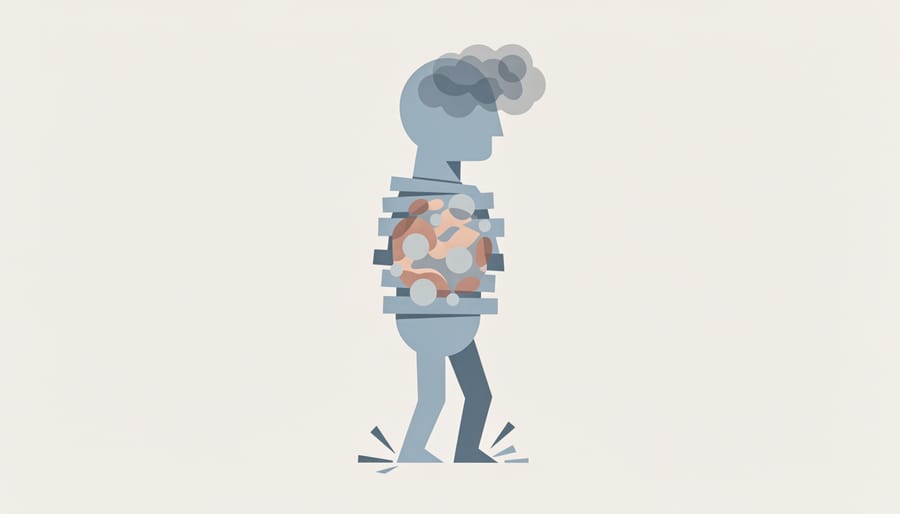
The trigger phase marks where the anxiety cycle begins, when you encounter a situation your brain perceives as threatening. These triggers vary widely from person to person. For someone in recovery, triggers might include attending a social event where alcohol is present, encountering financial stress that once led to substance use, or facing conflict in relationships that feels overwhelming.
What matters isn’t whether the threat is objectively dangerous, but whether your mind labels it as such. A phone call from an unknown number, an unexpected change in routine, or even positive stress like a job interview can activate your anxiety response. Past trauma and conditioned associations make certain situations especially potent triggers. If you previously used substances to cope with specific stressors, those same scenarios now carry double weight, they spark anxiety about both the situation itself and the fear of relapse.
The brain doesn’t always distinguish between real danger and perceived threat. Once triggered, it launches the same physiological alarm system either way, setting the rest of the cycle in motion.
The Response and Reinforcement Phase
Once anxiety is triggered, how you respond determines whether the cycle continues or breaks. The most common response is avoidance, canceling plans, escaping uncomfortable situations, or finding ways to numb the distress. These behaviors feel protective in the moment because they provide immediate relief from anxiety’s physical and emotional discomfort.
But avoidance carries a hidden cost. When you escape an anxiety-provoking situation, you never learn that the feared outcome likely wouldn’t happen, or that you could handle it if it did. Your brain interprets the relief as proof that the danger was real and that avoidance kept you safe. This reinforces the anxious belief and makes the next trigger even harder to face.
Substance use often becomes a powerful reinforcement mechanism in this phase. Alcohol or drugs can temporarily quiet racing thoughts and physical tension, creating a false sense of control over anxiety. This teaches your brain that substances are necessary to manage distress, adding a second destructive cycle to the first.
Each time you avoid or rely on unhealthy coping mechanisms, the anxiety cycle gains momentum. Natural anxiety reduction, the gradual calming that occurs when you stay with discomfort, never gets a chance to happen.
Components of the Anxiety Cycle
The anxiety cycle operates through four interconnected components that work together to create and maintain anxiety. Understanding these elements helps you see where you can intervene to break the pattern, especially during recovery when old coping mechanisms are no longer available.
The Cognitive Component
Your thoughts and beliefs form the foundation of the anxiety cycle. These aren’t just passing worries, they’re often automatic, deeply ingrained patterns of thinking that interpret situations as threatening. Someone in recovery might think “Everyone can tell I’m struggling” when entering a social situation, or “I’ll never be able to handle stress without using.” These thoughts aren’t facts, but your brain treats them as if they are, setting the entire cycle in motion.
The Physical Component
Anxiety doesn’t stay in your head. It creates real bodily sensations: racing heart, tight chest, shallow breathing, sweating, trembling, or nausea. These physical symptoms can be so intense that they become frightening in themselves. You might interpret a racing heart as evidence that something terrible is about to happen, which generates more anxious thoughts and intensifies the physical response.
The Emotional Component
The feelings that arise, fear, dread, panic, irritability, color your entire experience. These emotions can feel overwhelming, particularly when you’re used to numbing them with substances. The intensity itself becomes part of the problem, as you start to fear the feelings as much as the situations that trigger them.
The Behavioral Component
Your actions in response to anxiety complete the cycle. This usually means avoidance: skipping the support group meeting, canceling plans, staying home from work, or isolating from friends. While these behaviors provide temporary relief, they reinforce your brain’s message that the situation was genuinely dangerous. Substance use fits here too, it’s an avoidance behavior that prevents you from learning that you can tolerate discomfort without chemical help.
- Cognitive: Automatic thoughts like “I can’t handle this” or catastrophic predictions about social situations
- Physical: Racing heart, muscle tension, sweating, or digestive upset that feels impossible to ignore
- Emotional: Overwhelming fear, dread, or panic that seems disproportionate to the actual threat
- Behavioral: Avoiding people or places, canceling commitments, or turning to substances for relief
Low self-confidence acts as an accelerant for this cycle. When you don’t trust your ability to cope, every component intensifies. You’re more likely to interpret situations as threatening, experience stronger physical reactions, feel deeper emotional distress, and resort to avoidance. Building self-confidence becomes crucial because it weakens each link in the chain, making the cycle easier to interrupt and ultimately break.
The Connection Between Anxiety and Substance Use
Anxiety and substance use often become entangled in a particularly destructive pattern. When someone experiences persistent worry or panic, alcohol or drugs can seem like a quick fix, they temporarily numb the racing thoughts and calm the physical symptoms. But this relief is an illusion that actually tightens the grip of both problems.
Here’s what happens: the anxiety cycle triggers intense discomfort, and substances provide immediate (though short-lived) escape. As the effects wear off, anxiety rebounds with greater intensity. The brain begins to associate relief exclusively with substance use, making it harder to cope without them. Over time, this creates a dual cycle where anxiety drives substance use, and substance use worsens anxiety.
This connection is especially strong for people with generalised anxiety disorder, which involves chronic, excessive worry about everyday situations. Studies show that anxiety disorders are significantly more common among individuals in recovery than in the general population. Many people don’t realize they’re self-medicating anxiety until they attempt to stop using substances and face the full force of their underlying worry.
The relationship works both ways. Substances directly affect brain chemistry in ways that increase anxiety over time. Alcohol, for instance, disrupts GABA and glutamate systems that regulate calm and stress responses. Stimulants can trigger panic-like symptoms even in people who weren’t previously anxious. Withdrawal intensifies everything, anxiety in detox is often one of the most challenging aspects of early recovery.
Breaking free requires addressing both cycles simultaneously. You can’t fully resolve anxiety while still using substances to manage it, and you can’t maintain lasting recovery without learning healthier ways to handle anxious feelings. The good news is that evidence-based treatments like cognitive behavioral therapy effectively target both patterns at once.
How to Stop the Cycle of Anxiety

Cognitive Restructuring Techniques
Cognitive restructuring helps you spot and challenge the anxious thoughts that keep the cycle spinning. Start by catching yourself mid-worry: when anxiety flares, pause and write down exactly what you’re thinking. Common patterns include catastrophizing (“If I go to that meeting, I’ll completely fall apart”), black-and-white thinking (“I always mess things up”), or fortune-telling (“They’ll definitely judge me”). Once you’ve identified the thought, question its accuracy. Ask yourself: What’s the evidence for this? What would I tell a friend who had this worry? What’s a more balanced way to see this situation? For someone in recovery, an anxious thought might be “One stressful day means I’ll relapse.” A restructured version could be “I’ve handled tough days before without using, and I have my support system now.” This technique doesn’t eliminate anxiety overnight, but it weakens the cognitive fuel that drives the cycle, making each loop less intense.
Exposure Therapy and Facing Fears
Exposure therapy breaks the anxiety cycle by gradually facing feared situations in a controlled way. Instead of avoiding what scares you, you start small, maybe texting a friend if social situations trigger anxiety, then having a brief phone call, eventually meeting in person. Each step proves that the catastrophic outcome you imagined won’t actually happen. Your body learns through experience that the fear is disproportionate to the real threat.
The key is moving slowly enough that you don’t become overwhelmed, but consistently enough that you don’t retreat back into avoidance. Exposure reduces avoidance by showing you can handle uncomfortable feelings without needing substances or escape routes. For people in recovery, this might mean attending a support group meeting despite social anxiety, or sitting with cravings triggered by stress rather than reaching for old coping mechanisms. The anxiety typically peaks and then naturally decreases within 20 to 30 minutes, teaching your brain that you don’t need to run.
Relaxation and Mindfulness Practices
When anxiety activates your nervous system, physical symptoms like rapid heartbeat, muscle tension, and shallow breathing keep the cycle spinning. Relaxation techniques directly counter this response. Deep breathing, inhaling slowly through your nose for four counts, holding briefly, then exhaling for six, signals your body to shift out of fight-or-flight mode. Practice this when you first notice anxiety building.
Progressive muscle relaxation targets tension by systematically tensing and releasing muscle groups, starting with your feet and moving upward. This teaches you to recognize and release physical stress, breaking the feedback loop between bodily sensations and anxious thoughts.
Mindfulness practices help you observe anxious thoughts without getting pulled into them. Try focusing on the present, notice five things you can see, four you can hear, three you can touch. These coping mechanisms for anxiety work best when practiced regularly, not just during crisis moments, making them powerful tools for recovery.
Behavioral Experiments
Behavioral experiments are practical tests you design to challenge anxious predictions. If you believe asking for help will make others judge you as weak, the experiment is to actually ask someone and observe their reaction. Most often, you’ll find your feared outcome doesn’t happen, people respond with kindness, or they’re neutral, not contemptuous. This corrective experience directly contradicts the anxious belief that kept the cycle spinning. Over time, repeated experiments retrain your brain to expect realistic outcomes rather than catastrophic ones. In recovery, you might test predictions like “If I attend a support group, everyone will see how broken I am” by going and noting what actually occurs. The gap between what you feared and what happened becomes powerful evidence that your anxiety lies, helping you step out of avoidance and into a life where anxiety no longer dictates your choices.
Building Self-Confidence to Prevent the Cycle
Low self-esteem creates fertile ground for anxiety cycles to take root and flourish. When you doubt your abilities or worth, you’re more likely to interpret neutral situations as threatening, expect failure before you start, and avoid challenges that could prove your anxious predictions wrong. In recovery, this pattern becomes particularly damaging because rebuilding your life requires taking risks, trying new things, and tolerating the discomfort of growth.
The relationship works both ways: anxiety erodes confidence, and low confidence feeds anxiety. Each time you avoid a situation because you fear you can’t handle it, you reinforce the belief that you’re incapable. Breaking this pattern means actively building self-confidence as a buffer against anxiety triggers.
Small, consistent actions matter more than grand gestures. Start by identifying areas where you’ve succeeded, even in modest ways. Completing daily tasks, showing up to therapy sessions, maintaining sobriety for another day, these all count as evidence against the story anxiety tells about your inadequacy.
Practical steps that strengthen self-worth during recovery include:
- Setting achievable daily goals and acknowledging when you complete them
- Keeping a record of challenges you’ve faced successfully, no matter how small
- Practicing self-compassion when you make mistakes instead of spiraling into shame
- Engaging in activities that demonstrate competence, like learning a skill or helping others
- Spending time with people who recognize your strengths and support your growth
Pay attention to how you talk to yourself. The harsh internal critic that tells you you’re not good enough fuels both anxiety and the urge to escape through substances. Challenge those thoughts the same way you challenge anxious predictions: look for evidence, consider alternative explanations, and ask whether you’d speak to a friend that way.
Building confidence doesn’t mean eliminating all self-doubt. It means developing trust in your ability to handle difficult feelings and situations without falling apart or needing to numb yourself.
Frequently Asked Questions
What is the anxiety cycle?
The anxiety cycle is a self-perpetuating feedback loop where anxious thoughts trigger physical symptoms like rapid heartbeat or sweating, which then reinforce more anxious thinking. This pattern becomes self-sustaining because the physical sensations seem to confirm your fears, leading to avoidance behaviors that prevent you from learning the feared outcome won’t actually happen.
How long does it take to break the anxiety cycle?
There’s no fixed timeline, as it varies based on the severity of your anxiety, how long the pattern has been in place, and how consistently you practice interruption techniques. Some people notice improvements within weeks of applying CBT strategies, while others may need several months of regular practice and professional support to see significant change.
What CBT interventions are used for anxiety?
CBT is a structured, evidence-based approach to managing anxiety disorders that includes several core interventions: cognitive restructuring to challenge anxious thoughts, exposure therapy to face feared situations gradually, relaxation techniques like deep breathing, behavioral experiments to test your predictions, and mindfulness practices to stay present rather than caught in worry.
Can anxiety cycles return after I’ve broken them?
Yes, anxiety cycles can resurface, especially during periods of high stress, major life changes, or in recovery when you encounter new triggers. However, once you’ve learned to recognize the pattern and practiced the skills to interrupt it, you’ll be better equipped to catch it early and apply your coping strategies before it fully re-establishes itself.
How do I know if I need professional help for my anxiety?
Seek professional support if your anxiety significantly interferes with daily life, relationships, or work, if you’re using substances to cope with anxious feelings, or if self-help strategies haven’t provided relief after several weeks. A therapist specializing in anxiety or addiction can determine whether you’re dealing with a specific condition like generalised anxiety disorder or social anxiety vs agoraphobia and create a treatment plan tailored to your needs.
Understanding these common concerns can help you feel more confident about taking the first step toward breaking your anxiety cycle. Remember that seeking answers is itself a form of breaking the avoidance pattern that keeps anxiety alive.
Understanding the cycle of anxiety is your first real step toward freedom. Once you can see the pattern, the triggers, the physical reactions, the thoughts that spiral, the behaviors that lock it all in place, you’re no longer trapped in something invisible. You have a map, and with that map comes the possibility of change.
Breaking this cycle isn’t about perfection. It’s about practice. The cognitive tools, exposure strategies, relaxation techniques, and behavioral experiments we’ve covered work, but they work gradually. Some days you’ll interrupt the cycle early. Other days it’ll catch you off guard. That’s part of recovery, whether you’re healing from anxiety, substance use, or both.
You don’t have to do this alone. Therapists trained in CBT can guide you through these techniques with personalized support. If you’re in addiction treatment, talk to your counselor about how anxiety feeds into your recovery journey. Many treatment programs now integrate anxiety management because the two are so deeply connected.
Recovery from anxiety and substance use is possible. Thousands of people have learned to recognize their anxiety triggers, challenge the thoughts that fuel panic, and stop reaching for substances to numb the discomfort. You can too.
The cycle ends when you decide to step out of it. That decision doesn’t require courage you don’t have yet, it just requires willingness. Start small. Try one technique. Reach out for help. Your life beyond this cycle is waiting.