
If you’re lying awake at 3 a.m., your best first step isn’t a sleeping pill. Cognitive behavioral therapy for insomnia (CBT-I) is the first-line treatment recommended by sleep specialists, and it works by retraining the patterns that keep you awake. For people in recovery or dealing with substance use, this matters even more. Sleep problems affect up to 20% of Canadian adults, but the numbers climb higher when withdrawal, medication changes, or the stress of rebuilding your life enter the picture.
The quickest diagnostic check: if you’ve had trouble falling asleep, staying asleep, or waking too early at least three nights a week for more than three months, and it’s affecting your day, you likely meet the criteria for an insomnia disorder. Between 6% and 10% of Canadians do. That’s not just an inconvenience. Poor sleep derails recovery, worsens anxiety and depression, and costs the average person roughly $5,010 per year in lost productivity and health expenses.
This guide will walk you through recognizing your symptoms, identifying what’s fueling your sleeplessness (trauma, substance use history, racing thoughts, poor sleep habits), and applying the evidence-based strategies that make up CBT-I. You’ll also learn when to seek professional help, because some causes (sleep apnea, severe depression, medication side effects) require more than good sleep hygiene.
Sarah, three years sober, put it this way: “I thought I’d sleep better once I stopped drinking. Instead, I spent two years exhausted. Learning to fix my sleep without pills gave me my life back.” You can get there too.
Recognizing Your Sleep Problem: When Restlessness Becomes Insomnia
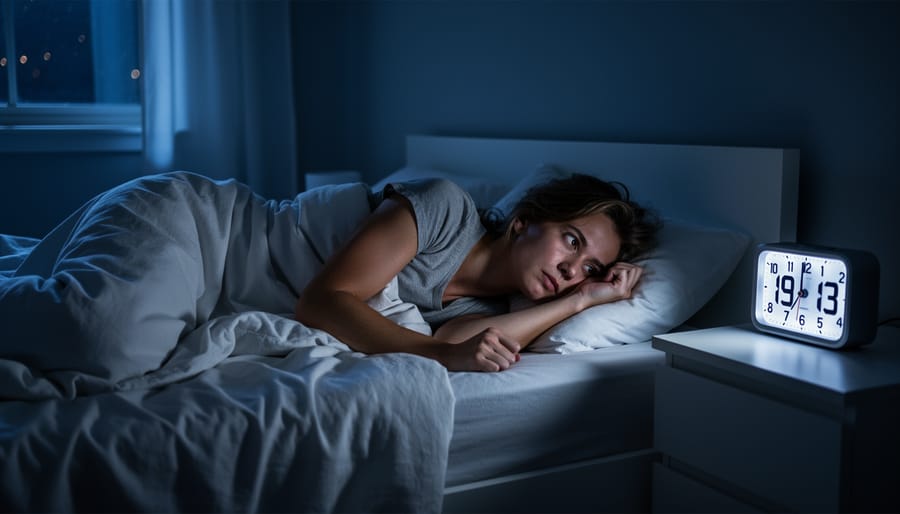
Most people toss and turn occasionally. You might struggle to fall asleep the night before a big event, or wake up at 3 a.m. worrying about something on your mind. That’s normal. What’s not normal is when sleeplessness becomes your nightly companion, following you into your days as fatigue, irritability, and an inability to focus on what matters.
The difference between a rough night and clinical insomnia comes down to frequency, duration, and impact on your life. If you’re having trouble falling asleep, staying asleep, or waking too early at least three nights per week for three months, and those sleep problems are affecting how you function during the day, you’re likely dealing with insomnia disorder rather than just a bad stretch.
- Insomnia Symptoms
- Difficulty falling asleep, staying asleep, or waking too early without being able to return to sleep. These symptoms can occur occasionally without meeting the criteria for a disorder.
- Insomnia Disorder
- Sleep difficulties occurring at least three nights per week for three months or longer, accompanied by significant daytime impairment. This is a clinical diagnosis requiring professional evaluation.
- Acute Insomnia
- Short-term sleep problems lasting days to weeks, often triggered by stress, illness, or life changes. Usually resolves once the trigger passes.
- Chronic Insomnia
- Persistent sleep difficulties lasting three months or longer, occurring at least three nights weekly. Requires treatment to improve.
The daytime piece is crucial. Around 10% to 15% of Canadians report insomnia symptoms with daytime consequences criteria meaning the sleep problems spill into their waking hours. You might notice you’re making more mistakes at work, snapping at people you care about, or feeling too exhausted to engage in recovery activities that normally keep you grounded. You’re not imagining the impact, and you’re not alone.
If your sleep problems are interfering with your job, relationships, or recovery, it’s time to take them seriously. The good news is that effective treatment exists, and you don’t have to white-knuckle your way through another sleepless night hoping it will magically improve.
What’s Keeping You Awake: Common Causes of Insomnia
Substance Use and Withdrawal
Alcohol might help you doze off, but it fragments sleep later in the night, suppressing REM sleep and leaving you groggy. Chronic drinking restructures sleep architecture entirely, you lose deep, restorative stages and wake frequently. When you stop, your brain rebounds hard: vivid dreams, night sweats, and hours of lying awake are common in early sobriety as your nervous system recalibrates.
Stimulants like cocaine, methamphetamine, and prescription amphetamines keep you wired by flooding the brain with dopamine and norepinephrine. Sleep becomes impossible during use, and withdrawal brings crushing fatigue paired with, paradoxically, an inability to stay asleep. Your sleep-wake cycle can take weeks or months to normalize.
Opioids suppress natural sleep rhythms and reduce slow-wave sleep, even while making you drowsy. Withdrawal flips this: restlessness, muscle aches, and autonomic hyperarousal make sleep nearly impossible. Many people describe withdrawal insomnia as one of the hardest symptoms to endure.
Benzodiazepines and sedatives seem like they solve insomnia, but they alter sleep quality and create dependence. Stopping them triggers severe rebound insomnia that can last weeks. Cannabis disrupts REM sleep and, despite its reputation as a sleep aid, worsens insomnia over time and during withdrawal.
Insomnia often peaks in the first month of recovery, then gradually improves, but it rarely resolves on its own without active treatment.
Mental Health and Trauma
Mental health conditions and insomnia feed off each other in a vicious cycle that’s especially challenging during recovery. If you’re struggling with anxiety, your racing thoughts keep you awake at night. Then the sleep deprivation makes your anxiety worse the next day, creating more worry about whether you’ll sleep tonight. Depression works similarly, insomnia is both a symptom and a trigger, with poor sleep deepening hopelessness and fatigue while the depression itself disrupts your sleep-wake cycle.
PTSD adds another layer of complexity. Nightmares and hypervigilance make your bed feel unsafe, your body staying on high alert even when exhausted. For many in recovery, trauma is part of the story that led to substance use in the first place. The substances may have helped you sleep initially, masking the underlying trauma-related sleep disruption. Now in recovery, those nightmares and night-time anxiety resurface.
This isn’t a character flaw or something you need to just push through. The relationship between mental health and sleep is biological. Addressing your insomnia often requires treating the co-occurring condition alongside the sleep problem itself. CBT-I works effectively even when anxiety, depression, or PTSD are present, and treating your sleep can actually improve your mental health symptoms. You’re not choosing between addressing trauma or fixing sleep, healing happens together.
Habits and Environment
Even small daily habits create powerful effects on sleep quality. Your routine and surroundings either support or sabotage rest, often in ways you don’t immediately connect to nighttime wakefulness.
Irregular sleep schedules confuse your body’s internal clock. Going to bed and waking at wildly different times, even on weekends, makes it harder to fall asleep when you want to. Your brain needs consistency to know when sleep should happen.
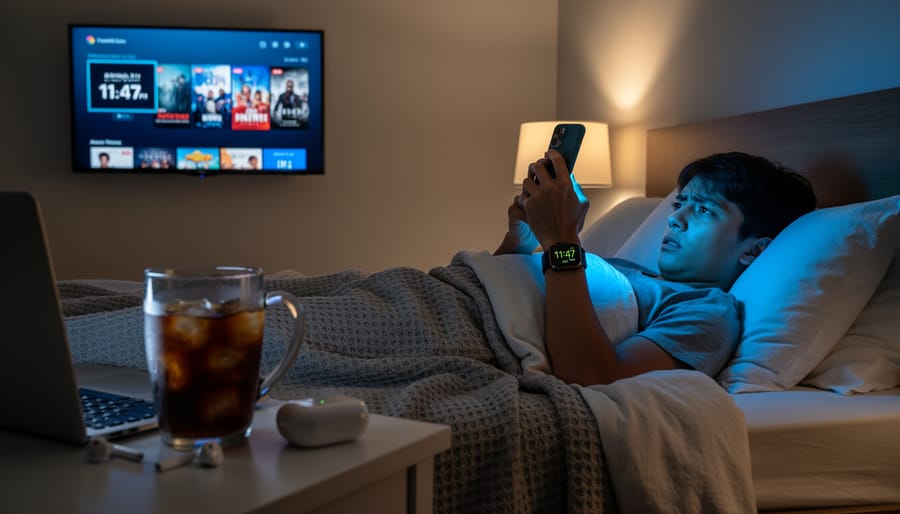
Screen time before bed suppresses melatonin, the hormone that signals it’s time to sleep. The blue light from phones, tablets, and computers tricks your brain into thinking it’s still daytime. Many people scroll through their phones when they can’t sleep, which only makes the problem worse.
Caffeine lingers in your system longer than most people realize. That afternoon coffee can still affect you six hours later. Alcohol might make you drowsy initially, but it fragments sleep throughout the night and often causes you to wake up feeling unrefreshed.
Your sleep environment matters too. A bedroom that’s too warm, too bright, or too noisy creates obstacles to rest. So does using your bed for work, eating, or watching TV, activities that train your brain to stay alert in the space meant for sleep.
How to Fix Your Sleep: Evidence-Based Treatment Steps
Step 1: Track Your Sleep Patterns
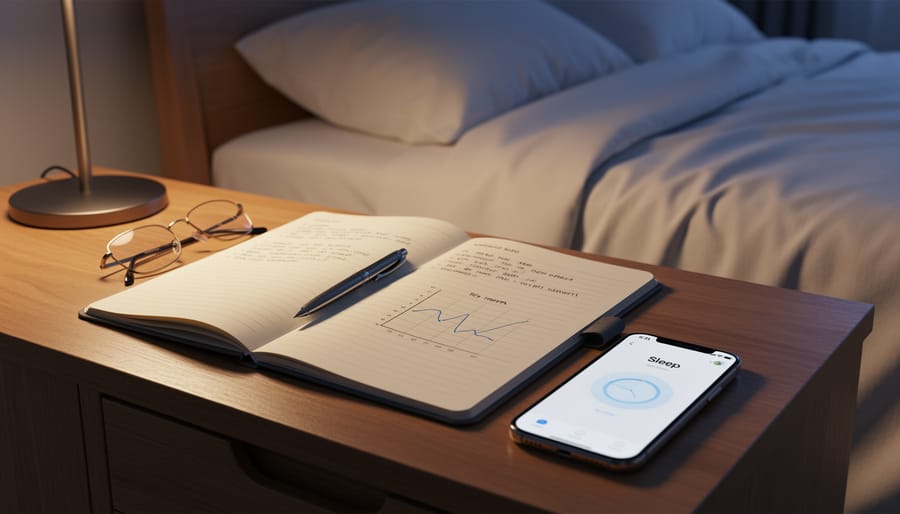
Tracking your sleep creates a map of what’s actually happening, not just how it feels. For one to two weeks, write down when you get into bed, how long you think it took to fall asleep, how many times you woke up, when you finally got up, and how you felt the next day. Note anything that might have affected your sleep: caffeine after 2 p.m., alcohol detox symptoms anxiety spikes, or screen time before bed. You’re looking for patterns, not perfection. Did you sleep better on nights when you avoided your phone? Worse after late naps? This baseline shows where to start and proves progress later when your brain insists nothing’s working.
Step 2: Apply Sleep Restriction and Stimulus Control
Sleep restriction and stimulus control are two powerful techniques that retrain your brain to associate your bed with sleep instead of wakefulness. They work by consolidating fragmented sleep into a shorter, more solid block, then gradually expanding it as your sleep efficiency improves.
Sleep restriction limits your time in bed to match your actual sleep time. If your sleep diary shows you’re sleeping five hours but spending eight hours in bed, you’ll start by allowing yourself only five and a half hours in bed. Calculate your prescribed sleep window by dividing total sleep time by total time in bed, if that ratio is below 85%, you need tighter restriction. Set a consistent wake time (say, 6 AM), then count backward to determine bedtime (12:30 AM in this example). CBT-I includes sleep restriction as a core component precisely because it builds sleep pressure that helps you fall asleep faster and stay asleep longer.
Stimulus control reinforces that your bed is for sleep only. Go to bed only when sleepy, not just tired. If you’re awake for more than 15-20 minutes, leave the bedroom and do something quiet in dim light until sleepiness returns. No phones, no work, no ruminating about PTSD symptoms or chronic anxiety while lying in bed. The goal is breaking the learned connection between your bed and frustration or hyperarousal, replacing it with a strong sleep association that works in your favor.
Step 3: Challenge Unhelpful Sleep Thoughts
Worry about not sleeping creates a vicious cycle that makes insomnia worse. When you lie awake thinking “I’ll never fall asleep” or “I’ll be useless tomorrow,” your body releases stress hormones that keep you alert. Catastrophic thinking turns occasional bad nights into chronic patterns.
CBT-I teaches you to identify and challenge these thoughts. Instead of “I must get eight hours or I can’t function,” you might recognize “I’ve functioned on less sleep before, and one bad night won’t ruin my recovery.” This isn’t positive thinking or pretending sleep doesn’t matter, it’s replacing exaggerated fears with realistic assessments.
Common unhelpful beliefs include: viewing sleep as something you can force, catastrophizing about health consequences, or believing you’ll never sleep normally again. Recovery amplifies these thoughts because sleep already feels fragile. When you notice yourself spiraling, write down the thought and ask whether it’s completely true. Most anxiety about sleep is worse than the actual fatigue.
This technique works alongside sleep restriction and stimulus control, not instead of them.
Step 4: Build Better Sleep Hygiene
Sleep hygiene isn’t a substitute for the core CBT-I techniques you’ve already learned, it’s the supportive framework that makes them work better. Think of it as setting the stage for successful sleep rather than forcing sleep to happen.
Start with your bedroom environment. Keep it cool (around 65-68°F), dark, and quiet. If you’re in shared living or transitional housing where you can’t control everything, use what you can: blackout curtains, a fan for white noise, earplugs. Make your bed a place your brain associates only with sleep and sex, not scrolling, worrying, or watching TV.
Your daily habits matter just as much:
- Stop caffeine by early afternoon; it stays in your system for six hours or more
- Get bright light exposure in the morning to anchor your circadian rhythm
- Move your body during the day, but finish intense exercise at least three hours before bed
- Avoid large meals and excessive fluids close to bedtime
- Create a 30-minute wind-down routine that signals your body sleep is coming
If you’re in early recovery, your sleep-wake schedule might still be erratic from substance use. Stick to your chosen sleep window from Step 2 even on weekends, consistency rebuilds the system. Skip the evening nap that feels tempting when you’re exhausted; it’ll only make nighttime sleep harder.
Step 5: Seek Professional CBT-I Support
If self-guided techniques aren’t enough, or you’ve tried them for several weeks without improvement, professional CBT-I can help. Licensed therapists trained in CBT-I provide structured treatment, typically over four to eight sessions. You’ll work through personalized sleep restriction protocols, address thought patterns unique to your situation, and adjust strategies based on your progress.
Finding a specialist can take effort. Ask your primary care provider or addiction counselor for referrals to psychologists or behavioral sleep medicine specialists who offer CBT-I. Some treatment centers include sleep support in their recovery programs. If in-person options are limited, telehealth CBT-I has proven just as effective and may offer more flexible scheduling.
Don’t wait until insomnia derails your recovery. Professional support gives you accountability, expert adjustments to the core techniques, and reassurance when progress feels slow. You’re not failing if you need help, you’re choosing the treatment that works.
What About Sleep Medications?
If you’re desperate for sleep, the idea of a pill that makes everything stop probably sounds like a lifeline. But for anyone in recovery or with a history of substance use, sleep medications come with serious risks that need honest discussion.
Many prescription sleep aids are sedative-hypnotics, the same class of drugs that includes benzodiazepines. These medications can be habit-forming, and they work on the same brain receptors affected by alcohol. If you’ve struggled with substances before, you’re at higher risk of developing dependence on sleep medications, even when taking them as prescribed. What starts as a temporary solution can quickly become another problem, especially since tolerance builds fast and the drugs stop working as well over time.
This is exactly why cognitive behavioral therapy for insomnia is recommended as first-line treatment, not medication. CBT-I addresses the root of your sleep problem without introducing new substances into your recovery. The techniques actually fix the mechanisms keeping you awake, while pills just mask symptoms temporarily.
That said, medication isn’t categorically off-limits. Under careful medical supervision, certain options like low-dose trazodone or melatonin might be considered, particularly if you’re managing severe insomnia alongside other mental health conditions. The key is working with a doctor who understands addiction medicine and can monitor you closely. They should also be helping you develop other coping mechanisms for sleep anxiety rather than relying solely on medication.
Your safest path forward combines CBT-I techniques with honest conversations about your history, not quick fixes that could undermine your recovery.
Protecting Your Sleep Long-Term: Prevention Strategies
Good sleep doesn’t come with a permanent guarantee, especially when you’re navigating the stages of recovery. Life throws curveballs: stress, schedule changes, illness, grief. The difference between occasional rough nights and sliding back into chronic insomnia lies in how you respond. Think of sleep protection as ongoing maintenance, not a one-time fix.
When you notice sleep starting to slip again, don’t panic or abandon everything that worked. A few difficult nights don’t erase your progress. Restart your sleep diary for a week to identify the pattern rather than catastrophizing. Are you staying up later checking your phone? Did a new medication change things? Is anniversary grief disrupting your routine? Once you spot the trigger, you can address it directly instead of watching insomnia rebuild.
Your CBT-I skills remain available even after formal treatment ends. Stimulus control and sleep restriction aren’t just for fixing broken sleep, they’re tools you can reapply whenever needed. If you find yourself lying awake for 20 minutes, get up. If your sleep window has drifted to seven hours in bed with only five hours of actual sleep, tighten it back to five and a half hours for a week. These techniques work repeatedly because they address the underlying mechanics of sleep, not just symptoms.
Protect your sleep foundation with these ongoing strategies:
- Maintain a consistent wake time within 30 minutes, even on weekends, to anchor your circadian rhythm through transitions and stress
- Reserve your bed exclusively for sleep and intimacy so your brain maintains the association between bed and rest, not rumination
- Schedule a weekly check-in with yourself about sleep quality and daytime functioning to catch problems before they compound
- Build stress management into your routine, meditation, exercise, therapy, because unprocessed stress reliably degrades sleep over time
- Stay connected to your recovery community and supports, since isolation and relationship strain often precede both sleep problems and substance use setbacks
Here’s the reality: protecting your sleep supports your sobriety, and protecting your sobriety supports your sleep. They’re tangled together. When sleep deteriorates, you’re more vulnerable to emotional dysregulation, impulsive decisions, and the desperation that whispers about quick fixes. Prioritizing sleep isn’t selfish self-care fluff. It’s relapse prevention.
If insomnia returns despite your best efforts, reach out for help early rather than suffering alone for months. Your recovery team should know, because chronic sleep deprivation makes everything harder. Getting support for sleep isn’t a failure. It’s using the tools that work.
Your Questions About Insomnia, Answered
Will getting sober automatically fix my insomnia? Many people in recovery hope the answer is yes, and while sobriety removes substances that disrupt sleep architecture, insomnia often persists even after detox. Withdrawal can actually worsen sleep problems in the short term, and the habits, anxieties, and brain changes that developed alongside substance use don’t resolve overnight. That’s why active treatment matters, even in recovery, insomnia requires its own intervention.
What exactly is CBT-I and how does it work?
Cognitive behavioral therapy for insomnia (CBT-I) is a structured program that changes the thoughts and behaviors keeping you awake. It combines techniques like sleep restriction, stimulus control, and cognitive restructuring to rebuild your natural sleep drive and break the connection between bed and wakefulness.
Is CBT-I really the first-line treatment for insomnia?
Yes. The American Academy of Sleep Medicine recommends CBT-I as the first-line treatment for chronic insomnia in adults, and it’s particularly important for people in recovery because it addresses the root problem without introducing potentially addictive medications.
How long does CBT-I take to work?
Most people see meaningful improvement within four to eight weeks of starting CBT-I. Some notice changes within the first two weeks, though initial sleep restriction can feel harder before it gets easier.
How can I access CBT-I if I’m in a recovery program?
Start by asking your addiction counselor, therapist, or primary care doctor for a referral to a sleep specialist or psychologist trained in CBT-I. Some treatment centers now integrate sleep interventions into their programming, and digital CBT-I programs offer another option if in-person access is limited.
Can I take sleep medications if I have a history of substance use? This is one of the most common questions, and the honest answer is that sedative-hypnotics carry real risks for people with addiction histories. Many sleep medications have abuse potential, can interfere with recovery, and don’t address the underlying causes of insomnia. That’s why CBT-I comes first. In some cases, a doctor may prescribe non-addictive sleep aids under close supervision, but that decision should happen in consultation with both your sleep specialist and your recovery team.
What if I’ve tried everything and still can’t sleep? If you’ve been working on sleep hygiene and basic techniques without improvement, it doesn’t mean you’re doomed to insomnia, it means you need professional CBT-I. Self-help strategies alone rarely match the effectiveness of working with a trained therapist who can tailor the program to your specific patterns and troubleshoot what’s not working. Persistent insomnia also warrants evaluation for other sleep disorders or medical conditions that might be contributing.
If you’re reading this because sleep has become a struggle, you’re not alone. Insomnia affects millions of people, and it’s especially common during recovery. The sleepless nights, the racing thoughts, the exhaustion that follows you through the day, these experiences don’t mean you’re failing. They mean you’re human, and they’re treatable.
The good news is that effective help exists. CBT-I works, often within weeks, and it doesn’t require medication that might complicate your recovery. You can start tonight with small changes: tracking your sleep, setting a consistent wake time, getting out of bed when you can’t sleep. These aren’t just coping strategies. They’re the foundation of lasting change.
Recovery isn’t just about what you’re leaving behind. It’s about building a life that supports you, and restorative sleep is part of that foundation. You’ve already taken difficult steps to get here. Taking the next one, whether it’s trying a sleep diary, reaching out to a therapist, or simply believing that better sleep is possible, is within your reach. You deserve rest, and you can find it.