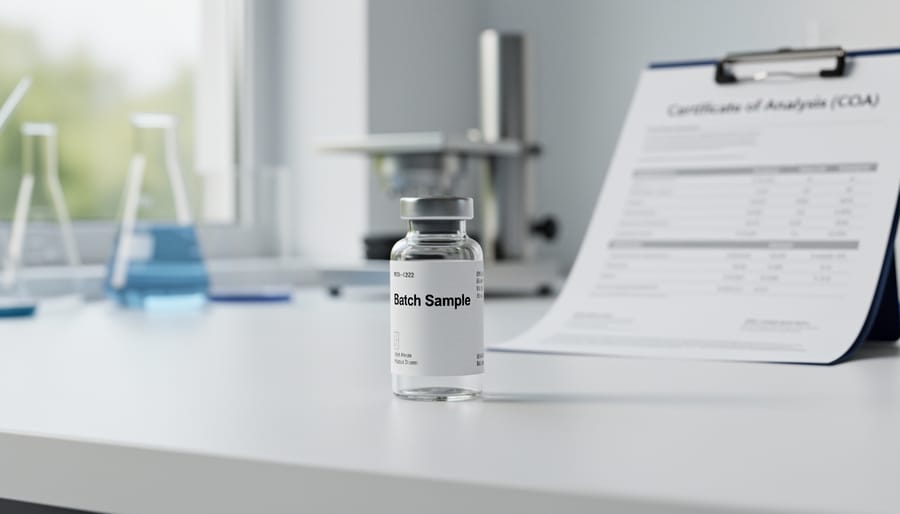
A certificate of analysis, or COA, is a lab report for one specific batch, and learning to read it takes about ten minutes. It tells you what a lab found in that batch: whether the compound matches what’s on the label (identity) and how much of the sample is the target compound versus everything else (purity). When you’re looking at KPV from Kylo or any other research batch, that document is your first and most useful checkpoint.
If you’re here because someone you love is working through addiction, or you’re exploring options yourself, it’s completely understandable to want clear answers. Many people in recovery communities come across peptides while looking for anything that might help, and wanting to be careful is a healthy instinct.
Key Takeaway: A COA is a batch-specific lab report that verifies identity and purity. It does not make a product safe or approved for human use, and a research-only label is a legal category, not a safety guarantee.
KPV is not an approved treatment for addiction or any other condition. So this guide focuses on reading documentation honestly, spotting weak paperwork, and knowing where to turn for real support.
What a Certificate of Analysis Is and Why Purity Matters for KPV Research Batches
Plain-Language Definitions: KPV, Research Batch, and COA
KPV is a very small piece of a larger protein. It’s made of three building blocks called amino acids: lysine, proline, and valine, which is where the letters K, P, and V come from. Scientists study it in laboratories, but it is not an approved medicine for any condition.
A research batch is a single production run of a compound, labeled for laboratory study only. “Research use only” means it hasn’t been reviewed by the FDA for safety, dosing, or human use. Each batch usually gets a lot number, like a serial number you can trace back to that run.
A certificate of analysis, or COA, is the lab report for one specific batch. Think of it as a report card showing what testing found: how pure the sample was, and whether it was the right compound at all. It only means something when its lot number matches your vial.
Why Purity and Verification Matter
A vial can look perfectly professional and still not contain what the label says. Research-only products aren’t made under the same oversight as approved medicines, so quality can vary quite a bit from one seller, and even one batch, to the next. A vial might hold less of the compound than advertised, a different compound altogether, or leftover materials from the manufacturing process that never got cleaned out.
None of this is meant to alarm you. It’s simply the reality of an unregulated space, and it’s why verification matters. A certificate of analysis is a basic safeguard because it replaces a seller’s promise with measured results from a lab. It won’t tell you everything, but it can show whether the identity and purity claims hold up.
This is especially relevant for people in recovery and their families. Your body is already doing hard work, and unknown ingredients or inconsistent strength add uncertainty you don’t need. Asking “can this be verified?” isn’t being paranoid. It’s a sensible, caring question to ask before anything else, and a pharmacist or doctor can help you think it through.
What a Trustworthy KPV Certificate of Analysis Should Include
Purity and Identity Tests Explained Simply
Two tests do most of the heavy lifting on a KPV certificate of analysis, and they answer two different questions.
HPLC (high-performance liquid chromatography) answers “how much of this sample is the compound we want?” Think of it like sorting a bag of mixed beads by size as they pass through a narrow tube. The machine draws a chart where each substance appears as a peak, and the share taken up by the KPV peak becomes the purity percentage.
Mass spectrometry answers “is it actually KPV?” It weighs the molecules with extreme precision. Because KPV is only three amino acids, its weight is very specific, so a match is a strong sign of the right compound.
You need both. A sample could be 99% pure and still be the wrong substance.
| COA element | What it tells you | What a good result looks like |
|---|---|---|
| HPLC purity | The share of the sample that is the target compound | A stated percentage, often 98% or higher, with the chromatogram included |
| Mass spectrometry identity | Whether the molecular weight matches KPV | A measured weight that closely matches the expected value for KPV |
| Batch/lot number | Which production run was tested | A number that exactly matches your vial’s label |
| Test date | When the testing was done | A specific, recent date |
A purity number alone is just a claim. The chromatogram and the mass reading are the evidence behind it.
Batch Details That Should Match Your Vial
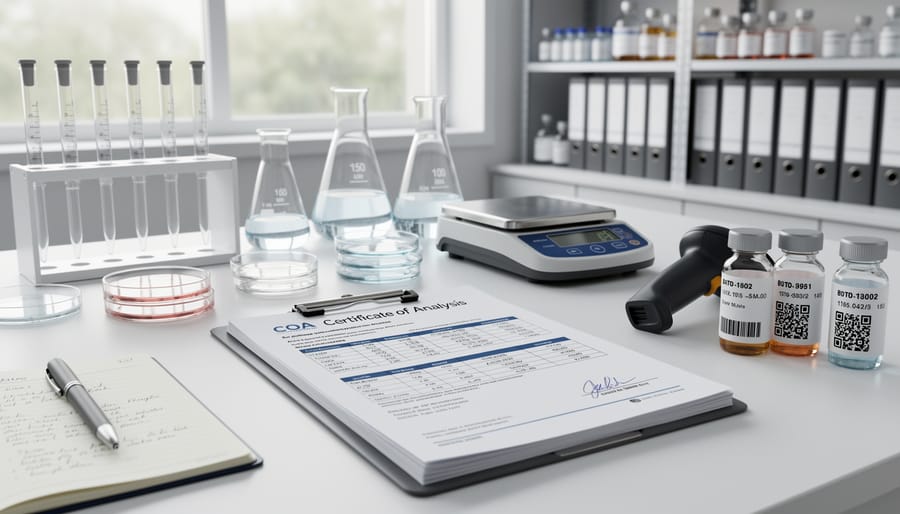
A certificate of analysis only means something if it describes the vial in your hands. Start with the batch or lot number. It should appear on the report and on the vial label, and the two should be identical, character for character. If the report lists a different lot, or no lot at all, it isn’t evidence about your product.
Next, check the compound name. The report should name KPV, ideally with its full sequence (Lys-Pro-Val), and that should line up with what’s printed on the label. A vague entry like “peptide” or a different compound’s name is a reason to pause.
Then look at the dates. A test date should come before any manufacture or packaging date on the label, and it should be reasonably recent. A report dated long before the batch existed doesn’t add up.
Finally, compare the stated amount per vial. If the report and label disagree, ask the seller to explain before relying on either document.
Keep a photo of both side by side for your records.
Your Rights and Responsibilities When Evaluating a COA
Wanting clear answers about a product is reasonable, and a few basic expectations and duties apply whenever you’re weighing a COA. It helps to separate what a supplier should provide from what only you can do.
What you can reasonably expect from a supplier:
- A batch-specific COA, not a generic sheet reused across products.
- The name of the testing lab, plus contact details so the report can be confirmed.
- Clear labeling that includes a lot number matching the report.
- A willingness to answer questions about testing methods and dates.
- A stated return or complaint policy.
What is your responsibility:
- Cross-check lot numbers, dates, and compound names yourself rather than assuming they match.
- Keep copies of the COA, receipts, and photos of the label.
- Talk with a licensed clinician before putting any substance in the body.
- Learn the legal and regulatory rules where you live.
That last point matters more than it may seem. Research-only products are not approved by the FDA for human use, and rules differ from place to place, so a COA never works as a permission slip. It documents what a lab found in one batch. It does not tell you a product is safe, legal, or right for you.
People in recovery have extra reasons to be careful. A pharmacist or addiction medicine physician would likely tell you that an unverified compound is a real concern because you can’t be sure what’s in it, and unknown ingredients can interact with medications or complicate recovery. The risks of combining substances are often underestimated, and an unlabeled ingredient only adds to that uncertainty.
Asking questions isn’t being difficult or paranoid. It’s a sensible form of self-care, and your care team is there to help you sort through the answers.
Red Flags and Verification Steps Before Trusting a Report

A document can look professional and still be unreliable, so it helps to have a simple routine. These steps aren’t about distrust. They’re about giving yourself solid footing before relying on any report.
1. Confirm the lab is real. Look up the testing lab’s name, address, and phone number independently, not through a link on the seller’s page. A genuine lab will usually have a website and a way to contact them.
2. Ask the lab to verify the report. Many reputable labs will confirm whether a report with a given reference number came from them. If a lab can’t or won’t, treat that as a signal to pause.
3. Match the lot number. The batch number on the report should be identical to the one printed on your vial. A report with no lot number, or a different one, tells you nothing about what you actually have.
4. Prefer independent testing. A report from a separate, third-party lab carries more weight than one produced in-house by the seller alone, since the seller has an obvious interest in good results.
5. Check for the details that make a report specific. Look for a test date, the compound name and sequence, and an actual chromatogram (the line graph showing the purity result). A bare number with no supporting data is hard to trust.
6. Notice generic or recycled documents. If the same report appears for many different batches, shows identical dates, or has been cropped or blurred, it may not describe your product.
7. Be wary of round numbers and pressure. A claim of exactly 100% purity, or any urgency like “buy now before it’s gone,” is worth slowing down for.
No single step settles the question, but together they paint a clearer picture. When something doesn’t add up, it’s perfectly reasonable to walk away or ask a pharmacist or doctor for guidance.
A Note for People in Recovery and Their Families
Maya (a composite of several people’s experiences, shared with identifying details changed) was eight months into recovery when she started reading online about peptides. A forum post promised that a tiny compound could calm inflammation, lift her mood, and maybe ease the cravings that still crept in on hard days. She understood the pull. After so much hard work, wanting something that felt like a shortcut made sense.
What helped was a simple question she brought to her counselor: “Has anyone checked what’s actually in this?” That one conversation opened up a bigger one about what she was hoping the product would fix. Together, they looked at what was already working, her therapy sessions, her medication plan, and her weekly peer meeting, and at what still felt unsteady. Her care team wasn’t dismissive. They took her curiosity seriously and helped her see it for what it was: a wish to feel better, which is a healthy instinct.
Evidence-based treatment, therapy, medication-assisted options where appropriate, and the support of people who understand what you’re going through remain the foundation of lasting recovery. Being curious about wellness is nothing to be ashamed of. The key is to bring that curiosity into the open, with a doctor, pharmacist, or counselor, before putting any unapproved substance in your body. Unknown contents and possible interactions can affect both your health and your recovery.
Families can help by staying calm and asking questions rather than assigning blame. And if a setback happens, there is help during relapse for you and the people who love you.
Where to Get Help and Reliable Information
Reaching out for help is a sign of strength, and you don’t have to sort through questions about peptides, purity reports, or recovery by yourself. Here are reliable places to start.
For support with substance use, the SAMHSA National Helpline (1-800-662-HELP, or 4357) is free, confidential, and open 24 hours a day, every day of the year. A trained specialist can point you toward local services, whether you’re asking for yourself or for someone you love. If you want to learn what care can look like, our guide to treatment options is a good next step, and this site’s treatment and support-group directories can help you find a program or a peer community near you.
Your primary care doctor or an addiction medicine specialist is the best person to ask before trying any unapproved substance. They know your health history, your medications, and your recovery goals. A pharmacist is another underused resource. Pharmacists can answer questions about unfamiliar compounds and possible interactions, usually without an appointment.
For reliable information on unapproved products, the FDA’s consumer pages explain what these products are and why they carry risks. If you or someone near you has taken something and feels unwell, call Poison Control at 1-800-222-1222 right away. In an emergency, call 911.
Asking questions is not a sign of failure. It’s how people protect their health and their progress.
Frequently Asked Questions About KPV Purity and COAs
What purity percentage is considered good for a KPV research batch?
Many reports list 98% or higher by HPLC, and that’s a common reference point rather than a safety guarantee. A high number only tells you how much of the sample is the target compound, not whether it’s suitable for any use.
Is a certificate of analysis the same as FDA approval?
No. A COA is a lab report about one batch’s identity and purity, while FDA approval means a product has been reviewed for safety and effectiveness for a specific use. KPV research products have not been approved as a treatment for addiction or any condition.
Can I trust a COA I find online?
Not automatically. Check that the lot number matches your vial, that the lab is real and can confirm the report, and that a chromatogram and test date are included. Generic or recycled reports are a reason to pause and ask questions.
What does “research use only” mean?
It means the product is sold for laboratory study, not as a medicine, supplement, or something meant for people to take. It also signals that the usual safety and quality oversight for medications doesn’t apply.
Two more questions come up often. Batches are generally tested when they’re made, and a fresh report makes sense whenever a new lot arrives or a vial has been stored for a long time, since each batch can differ from the last. Peptides can also change as they age or if they’re stored poorly.
And yes, talking with your doctor or pharmacist first is a wise step. That’s especially true if you’re in recovery, since unknown contents or interactions could affect your health and progress. Asking questions isn’t a sign of doubt in yourself, and it’s a good moment to reach out and get professional help or a trusted second opinion.
A certificate of analysis is a useful tool. It can help you confirm what a batch is and how pure it claims to be, and learning to read one puts some control back in your hands. But a COA is not a promise of safety, and it can never stand in for the guidance of a doctor, counselor, or pharmacist who knows your story.
If you’re in recovery, or supporting someone who is, hold onto this: real, evidence-based help exists, and reaching for it takes courage. Explore our treatment and support resources, and let a trusted care team walk the next steps with you.