Quotes about overcoming addiction are short, memorable statements from people who have lived recovery, studied it, or supported someone through it, and they’re meant to offer perspective, courage, or a moment of calm when the road feels long. A good one won’t fix anything on its own. What it can do is meet you in a hard moment and remind you that change is possible and that you’re not walking alone.
That matters because recovery is built from small, ordinary days. Early mornings, difficult cravings, quiet doubts. Encouraging words give the mind something steady to hold onto in those moments. Many people keep a favorite line on a phone lock screen, a bathroom mirror, or the inside of a journal cover. Families and caregivers use them too, to say “I believe in you” when the right words are hard to find.
This article gathers quotes by theme and by the moment you might need them, from taking the first step to rebuilding trust to marking milestones. You’ll also find simple ways to use them, a few expert thoughts on why encouragement supports healing, and answers to common questions. If you or someone you love is ready for more than words, professional support is available, and reaching out is a sign of strength.
What Quotes About Overcoming Addiction Really Mean
Quotes about overcoming addiction are short, memorable statements that put hope, courage, and perseverance into words. They come from people in recovery, counselors, writers, and peer-support communities who have seen how hard change can be, and how possible it is. A good one can feel like someone sitting beside you, saying, “I know this is hard, and you can keep going.”
It helps to be clear about what these quotes are and what they aren’t. They are a source of encouragement and a gentle reminder of the strength you already carry. They are not a replacement for treatment, therapy, or medical care. Think of them as a steady companion alongside professional support, not a substitute for it.
A few terms come up often in recovery conversations, so here they are in everyday language:
- Recovery
- An ongoing process of healing and building a healthier life. It looks different for everyone, and it isn’t a straight line.
- Affirmation
- A short, positive statement you repeat to remind yourself of your worth and your goals.
- Relapse prevention
- The skills and plans that help someone recognize challenges early and stay on their chosen path.
- Peer support
- Encouragement shared between people who have lived through similar experiences, often in groups or meetings.
- Mindfulness
- Paying calm, non-judgmental attention to the present moment, including your thoughts and feelings.
Throughout this article, you’ll see these ideas show up again. Each quote you read is really just a few honest words pointing toward them: that healing is possible, that you belong, and that every step counts.
How Words of Encouragement Support Healing
Why a Few Words Can Make a Hard Day Easier
Hard days in recovery often feel loud. Worry, doubt, and loneliness can pile up fast, and it’s easy to believe nobody else has felt this way. A single line of encouragement can cut through that noise. It reminds you that someone else has stood where you’re standing and kept going.
That small pause matters. When a discouraging thought starts to spiral, reading a steady, hopeful sentence gives your mind something else to hold. It won’t solve everything, but it can soften the moment enough to take a breath and choose your next small step.
Addiction specialists often describe this as a kind of gentle redirection. Short, repeated messages of hope can help people interrupt negative self-talk and stay connected to their reasons for recovery. Many counselors suggest keeping a favorite line close, so it’s there the moment a tough feeling arrives.
Using Quotes Alongside Professional Support
A quote can steady you on a hard afternoon, but it can’t do the work of a counselor, a doctor, or a recovery program. Think of encouraging words as one small support among many, much like how peer support doesn’t replace professional treatment so much as strengthen it.
Therapy helps you understand what’s underneath the struggle. Medical care keeps you safe, especially if withdrawal or other health concerns are part of the picture. Recovery programs and support groups give you structure and people who truly understand. A good quote fits nicely alongside all of that.
If you find that words on a page aren’t enough anymore, that’s okay. It’s actually a useful signal. Reaching out to a treatment provider, your doctor, or a helpline is a strong, hopeful step, and you don’t have to wait for a crisis to make that call. You deserve real support, not just kind words.
Types of Recovery Quotes and the Moments They Meet
Quotes for Starting Out and Finding Hope
The first steps are often the hardest, and the right words can make them feel a little lighter. If you’re thinking about treatment, or standing beside someone who just began, these lines may help:
“A journey of a thousand miles begins with a single step.” (Lao Tzu)
“You don’t have to see the whole staircase, just take the first step.” (often attributed to Martin Luther King Jr.)
“Hope is being able to see that there is light despite all of the darkness.” (Desmond Tutu)
Early on, it helps to know that when every day feels uphill you’re not failing. You’re simply at the start. Learning about the recovery stages can also show you that progress comes in small, steady steps.
Quotes for Tough Days and Setbacks

Hard days happen, and they do not cancel the progress you have made. On those days, you may need words that meet you where you are instead of demanding more. A line like “Fall seven times, stand up eight” reminds us that getting back up is the point, not never stumbling.
Many people in recovery find comfort in seeing a setback as information rather than failure. Researchers who study relapse as learning describe it as a chance to understand triggers and adjust the plan. Try a gentle phrase such as “Progress, not perfection,” and say it kindly to yourself. If a hard stretch feels too heavy to carry alone, reach out to your counselor or a helpline.
Quotes for Celebrating Progress and Giving Back
Milestones deserve to be noticed, whether it’s thirty days, one year, or a quiet Tuesday when you realize you’ve handled something you once feared. Quotes at these moments tend to focus on gratitude and on sharing what you’ve learned.
A line like “We are all just walking each other home,” often credited to Ram Dass, fits an anniversary because it honors the people who walked beside you. Another familiar reminder, “Progress, not perfection,” works well when a friend or family member needs encouragement without pressure.
Try reading one aloud at a group meeting, writing it in a card, or saving it for a loved one’s milestone. Celebrating small wins is part of recovery, and so is passing hope along to someone just starting out.
A Personal Story: When One Sentence Changed the Day
Here is a shared account, with the name and details changed to protect privacy. Maya, a woman in her second month of recovery, nearly gave up one Tuesday evening. The days since she’d stopped drinking had been rough, and a wave of detox anxiety had left her feeling shaky, tired, and sure she wasn’t cut out for this.
Her sponsor had given her an index card weeks earlier. On it was a line she’d barely noticed: “Courage doesn’t always roar. Sometimes courage is the quiet voice at the end of the day saying, ‘I will try again tomorrow.'” That night she read it out loud, once, then again.
Nothing dramatic happened. Her worries didn’t vanish. But she felt a little less alone, and a little more willing to take the next small step. She called her sponsor, drank some tea, and made it to the next morning.
Maya still keeps the card in her wallet. She says it didn’t fix anything on its own. It reminded her of her own strength at a moment when she couldn’t quite find it, and sometimes that is enough to carry someone through one more day.
How Recovery Quotes Are Used in Everyday Life and Support Settings

Daily Habits That Keep Encouragement Close
Small, steady habits tend to work better than big gestures, and a few words you see every day can quietly build a foundation of hope.
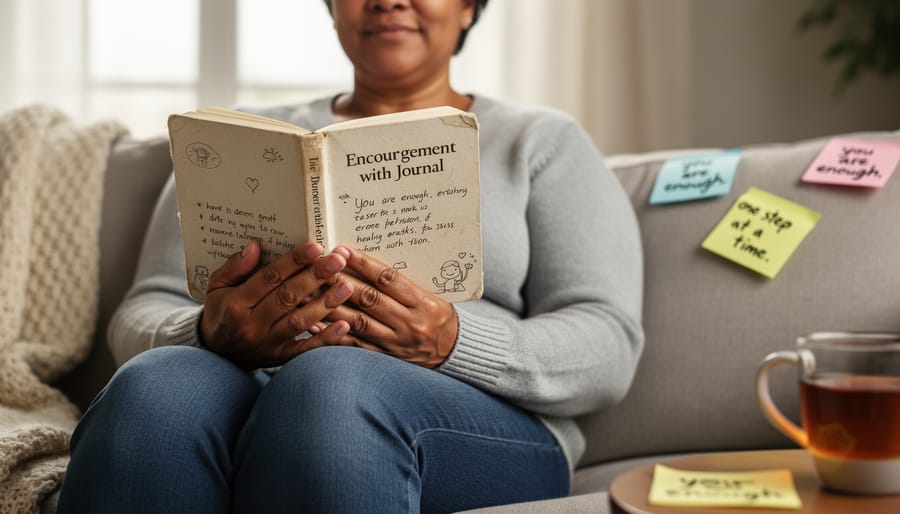
Try starting your morning by reading one quote aloud before you check your phone. Choose a line that feels true to where you are right now, not one that feels forced. You might keep a notebook nearby and jot down how the words land, or use the quote as a journaling prompt: What does this mean for me today?
Little reminders help, too. Write a favorite line on a sticky note for your bathroom mirror, or set it as your phone wallpaper so it greets you throughout the day.
At night, take a quiet minute to reflect on one thing that went well. Progress counts, even when it feels small.
Sharing Quotes With Loved Ones and Support Groups
If you’re a parent, partner, or friend, a quote can say what’s hard to say out loud. Keep it simple. A short text, a note tucked in a lunch bag, or a card that says “thinking of you” lands softly. Skip the follow-up questions about whether it helped. The goal is to show you care, not to check on progress or steer the conversation.
In support settings, quotes often open or close a meeting. A facilitator might read one to set a hopeful tone, or invite members to share a line that has carried them through the week. Online communities do something similar, with members posting a favorite quote and a sentence about why it mattered. Sharing is always optional, and simply listening counts too.
Common Questions About Recovery Quotes
Many people have the same handful of questions when they start looking for words of encouragement. Here are honest, practical answers.
Can quotes really help with addiction recovery?
They can. A short, hopeful line can ease loneliness, interrupt a discouraging thought, and give you something steady to hold onto between meetings or appointments. Think of them as a gentle boost, not a cure.
What if a quote doesn’t resonate with me?
That’s completely okay. Different words land for different people, so keep looking until one feels true to your own story rather than forced. You can also write your own line in a journal.
How can I support a loved one with encouraging words?
Keep it simple, kind, and pressure-free. A short note or text with a hopeful line, paired with “I’m here for you,” often means more than a long speech.
Are quotes enough on their own?
No. Quotes support recovery, but they don’t replace therapy, medical care, or a structured program. If you’re noticing physical symptoms or struggling to cope, please reach out to a healthcare provider or treatment professional.
If you’re wondering where to turn next, a good first step is talking with a doctor, counselor, or a confidential helpline in your area. Support groups and online recovery communities can also connect you with people who understand what you’re going through, so you never have to carry hard days alone. Reaching out takes courage, and it’s one of the strongest things you can do for yourself or someone you love.
Recovery is a journey, and it rarely moves in a straight line. Hard days are part of the path, and they don’t erase the progress you’ve made. Sometimes a few kind words are all it takes to steady you, whether that’s a line pinned to your mirror, a message from someone who believes in you, or a quote you carry into a meeting.
Let those words keep you company, and remember that they work best alongside real support. If you’re working through Overcoming Addiction Challenges, you don’t have to do it alone. Take a look at our treatment resources, browse the support group directory, or find a welcoming online community where others understand what you’re feeling.
Reaching out for help is never a weakness. It’s a sign of strength, and it’s often the bravest step on the way forward. Be patient with yourself today. You are doing something hard, and you are worth every bit of the effort.