
Anxiety symptoms during alcohol detox typically begin within 6 to 12 hours of your last drink and can include racing heart, sweating, trembling hands, intense worry, panic attacks, and difficulty sleeping. These symptoms happen because alcohol suppresses your nervous system, and when you stop drinking, your brain goes into overdrive trying to rebalance itself. What you’re feeling is real, it’s a normal part of withdrawal, and it doesn’t mean you’re doing something wrong.
If you’ve been drinking heavily for weeks, months, or years, your brain has adapted to constant alcohol exposure. When you suddenly stop, your body’s stress response kicks into high gear. Some people describe it as feeling like their nerves are on fire or like they’re constantly waiting for something terrible to happen. Others experience physical symptoms so intense they worry something is medically wrong. Both experiences are valid, and understanding what’s happening in your body can make the process less frightening.
The challenge is knowing when anxiety is a manageable part of detox and when it signals a medical emergency. While many people successfully manage mild to moderate anxiety symptoms with support and coping strategies, severe anxiety can sometimes indicate dangerous complications like delirium tremens. You deserve to go through this process safely, with the right level of medical care for your situation.
This article breaks down exactly what anxiety symptoms look like during alcohol detox, explains the science behind why they happen, and helps you understand when to seek immediate medical attention. You’ll also find practical strategies from addiction specialists and people who’ve walked this path before you.
Why Anxiety Occurs During Alcohol Detox
Your body’s anxiety response during alcohol detox isn’t a sign of weakness or imagination. It’s a direct result of your brain working hard to restore balance after prolonged alcohol use has fundamentally altered its chemistry.
Alcohol functions as a depressant by enhancing GABA, a neurotransmitter that calms brain activity, while simultaneously suppressing glutamate, which stimulates the nervous system. When you drink regularly over time, your brain compensates for alcohol’s constant presence by producing less GABA and more glutamate to maintain normal function. Your brain essentially adjusts its baseline to account for alcohol always being there.
When you stop drinking, this carefully calibrated system suddenly faces a crisis. The alcohol that was suppressing your nervous system is gone, but your brain is still operating with reduced GABA and elevated glutamate. The result is a hyperactive nervous system with nothing to slow it down, creating the physical and mental sensations you experience as anxiety.
Think of it like suddenly removing noise-canceling headphones in a loud environment. Your brain had turned up its volume to hear through alcohol’s dampening effect. Now that dampening is gone, but your brain hasn’t adjusted the volume back down yet. Everything feels too loud, too intense, too overwhelming.
This rebalancing process takes time. Your brain needs to recalibrate its neurotransmitter production and receptor sensitivity, which doesn’t happen overnight. The good news is that your brain is remarkably capable of healing itself. The anxiety you’re feeling now is actually evidence that your nervous system is working to restore healthy function. With proper support and time, these chemical systems will stabilize, and the intense anxiety will subside.
Common Anxiety Symptoms You May Experience
Physical Anxiety Symptoms
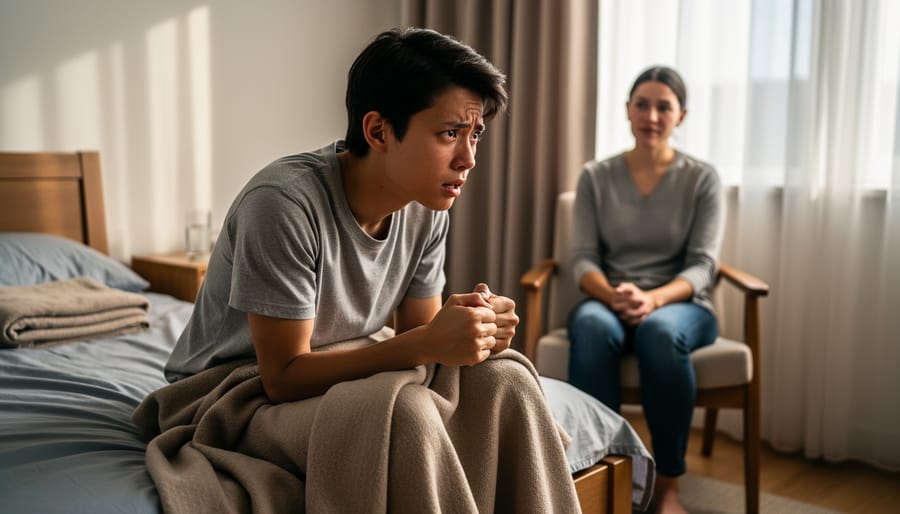
Your body’s physical response to alcohol withdrawal can feel overwhelming and frightening. As your nervous system adjusts to functioning without alcohol, you’ll likely experience multiple bodily sensations that signal heightened anxiety.
The most common physical symptoms include a racing or pounding heart that makes you acutely aware of every beat. You might feel chest tightness or pressure that can be alarming, though it’s typically a muscle tension response rather than a cardiac emergency. Sweating often occurs even in cool environments, sometimes accompanied by chills or hot flashes as your body’s temperature regulation struggles to stabilize.
Trembling or shaking hands are frequent during detox, ranging from barely noticeable tremors to more pronounced shaking that makes simple tasks difficult. Many people experience waves of nausea or stomach discomfort, sometimes with loss of appetite or digestive upset. Your muscles may feel perpetually tense, particularly in your shoulders, neck, and jaw, contributing to headaches and overall physical exhaustion.
Other manifestations include shortness of breath or feeling like you can’t get enough air, dizziness or lightheadedness, and a general sense of physical weakness. These symptoms typically peak within the first few days and gradually diminish, though their intensity varies significantly between individuals based on drinking history and overall health.
Emotional and Mental Anxiety Symptoms
The emotional and psychological toll of alcohol detox often proves more distressing than the physical symptoms. Many people experience overwhelming waves of fear or dread that seem to come from nowhere, making it difficult to feel safe or calm even in familiar surroundings. These feelings can escalate into full panic attacks, sudden episodes of intense fear accompanied by chest pain, difficulty breathing, and a sense that something terrible is about to happen.
Irritability becomes another constant companion. Small frustrations feel magnified, and patience wears thin quickly. Your mind may race with anxious thoughts that jump from one worry to another without resolution, making it nearly impossible to concentrate or complete simple tasks. This mental restlessness often makes sleep elusive, you might struggle to fall asleep, wake frequently through the night, or lie awake despite exhaustion. Some people describe feeling emotionally raw or on edge, as though their nervous system is stuck in overdrive.
These emotional symptoms reflect your brain’s struggle to regulate mood and stress responses without alcohol’s suppressive effects. While profoundly uncomfortable, they’re a normal part of the detox process and signal that your body is working to restore its natural balance.
When Anxiety Symptoms Peak
Anxiety symptoms typically follow a predictable pattern, though everyone’s experience varies. Most people notice anxiety intensifying during the first 24 hours after their last drink. The discomfort usually grows more pronounced as symptoms peak in 24-72 hours when the brain is working hardest to adjust to alcohol’s absence. During this window, you might feel your anxiety is at its worst, with rapid heartbeat, intense worry, and physical tension all competing for attention.
After the third day, many people notice their anxiety beginning to ease. The sharp edges soften, panic episodes become less frequent, and breathing feels a bit easier. By the end of the first week, acute anxiety symptoms typically improve significantly for most individuals.
However, this doesn’t mean all anxiety disappears completely. Some people continue experiencing milder anxiety for several weeks or even months afterward. This lingering discomfort, sometimes called post-acute withdrawal, reflects your brain’s ongoing recovery process. Your nervous system needs time to fully recalibrate. If anxiety persists beyond a few weeks or interferes with daily functioning, it’s worth discussing with a healthcare provider who can assess whether you need additional support or treatment.
Distinguishing Between Normal Detox Anxiety and Severe Complications
While anxiety is a normal part of alcohol detox, certain symptoms signal dangerous complications that demand urgent professional intervention. Learning to recognize these warning signs can be lifesaving.
Most people experience heightened anxiety, racing thoughts, trouble sleeping, increased heart rate, and feelings of nervousness during the first week of detox. These symptoms, while uncomfortable, typically fall within the expected range of withdrawal. Your body is adjusting to functioning without alcohol, and this discomfort is part of that process.
However, some symptoms indicate your nervous system is becoming dangerously dysregulated. If you experience severe confusion where you don’t know where you are or what day it is, if you see or hear things that aren’t there, if you have a seizure, or if you develop a high fever, you’re experiencing complications beyond ordinary anxiety that needs immediate medical care.
Delirium tremens (DTs) represents the most serious withdrawal complication, typically emerging 48-96 hours after your last drink. This condition causes profound confusion, severe trembling, dangerous blood pressure spikes, and potentially fatal seizures. People with a history of heavy, long-term drinking or previous severe withdrawals face higher risk.
The challenge is that the line between manageable anxiety and dangerous complications isn’t always obvious when you’re going through it. Anxiety naturally makes you hyperaware of every sensation, which can blur your judgment about what’s normal. This is precisely why medically supervised detox is so important, trained professionals monitor your vital signs and symptoms continuously, catching warning signs early and intervening before complications become life-threatening.
How Medical Detox Programs Manage Anxiety Symptoms
Medical detox programs are specifically designed to safely manage anxiety symptoms that arise during alcohol withdrawal. When you enter a supervised detox facility, you’re immediately assessed by medical professionals who understand exactly what you’re experiencing and have the tools to help.
The cornerstone of anxiety management in medical detox is continuous monitoring. Nurses check your vital signs regularly, heart rate, blood pressure, temperature, and use standardized assessment tools to track the severity of your withdrawal symptoms, including anxiety. This monitoring allows the medical team to respond quickly if your symptoms intensify, adjusting treatment before you reach a crisis point.
Medication plays a crucial role in controlling anxiety during detox. Benzodiazepines like lorazepam or diazepam are the standard treatment because they work on the same brain receptors as alcohol, essentially replacing alcohol’s calming effect while your nervous system stabilizes. These medications significantly reduce anxiety, prevent seizures, and make the detox process far more comfortable. The medical team carefully calibrates your dosage based on your symptoms, gradually tapering the medication as your body adjusts.
Some programs also use additional anti-anxiety medications, beta-blockers to manage physical symptoms like rapid heartbeat, or medications to help with sleep. Everything is administered under medical supervision to ensure safety and effectiveness.
Beyond medication, quality detox programs provide round-the-clock supportive care. Staff members trained in addiction medicine offer reassurance, help you understand what’s happening in your body, and teach you coping techniques you can use immediately. Many facilities create calm, comfortable environments that reduce external stressors while you’re healing.
The difference between medically supervised detox and attempting detox alone is profound. With professional help, your anxiety symptoms are anticipated, monitored, and actively managed. You’re not left to wonder if what you’re experiencing is normal or dangerous, medical professionals make those determinations for you. This support dramatically reduces both the physical discomfort and the psychological fear that make detox so difficult. Most importantly, medical detox keeps you safe during the most vulnerable period of early recovery.
Coping Strategies for Anxiety During Detox
While medical supervision forms the foundation of safe alcohol detox, several practical techniques can help you manage anxiety symptoms as your body adjusts. These strategies won’t eliminate withdrawal anxiety entirely, but they can reduce its intensity and help you feel more in control during difficult moments.
Simple Techniques You Can Use Right Now
- Deep Breathing Exercises: When anxiety spikes, your breathing becomes shallow and rapid, which intensifies panic. Try the 4-7-8 technique: breathe in slowly through your nose for four counts, hold for seven counts, then exhale completely through your mouth for eight counts. Repeat three to four times. This activates your parasympathetic nervous system and counteracts the fight-or-flight response driving your anxiety.
- 5-4-3-2-1 Grounding Method: This sensory technique interrupts anxious thought spirals by anchoring you in the present moment. Name five things you can see, four you can touch, three you can hear, two you can smell, and one you can taste. Go slowly through each sense, describing what you notice in detail. This shifts your brain’s focus from internal worry to external reality.
- Progressive Muscle Relaxation: Anxiety creates tremendous physical tension. Starting with your toes and moving upward, tense each muscle group for five seconds, then release completely. Notice the difference between tension and relaxation. This practice helps discharge the physical energy of anxiety while giving your mind something concrete to focus on.
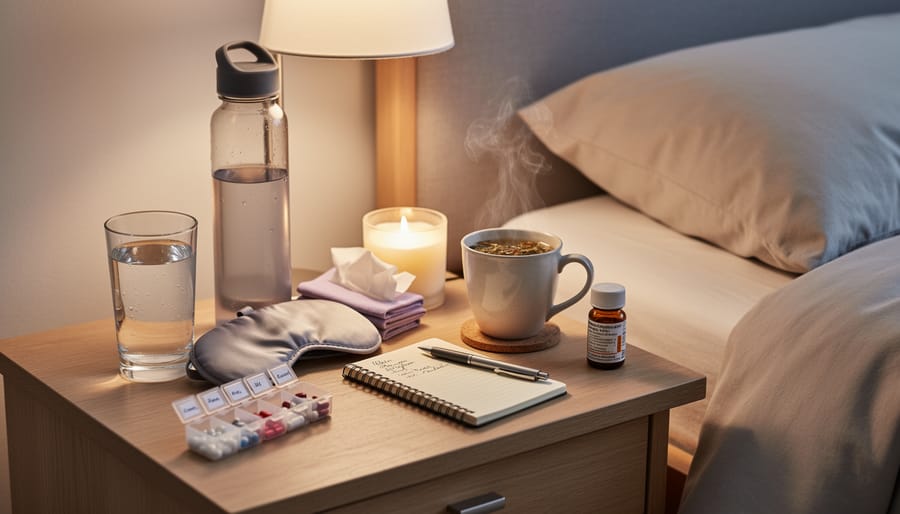
- Stay Consistently Hydrated: Dehydration worsens every withdrawal symptom, including anxiety. Sip water throughout the day rather than drinking large amounts at once. Add electrolyte solutions if you’re sweating heavily or experiencing nausea. Proper hydration supports your nervous system as it recalibrates.
- Connect With Support People: Isolation amplifies anxiety during detox. Reach out to trusted friends, family members, support group contacts, or medical staff when symptoms feel overwhelming. You don’t need to manage this alone, and verbalizing your experience often reduces its power.
Gentle movement can also help when you feel physically able. A slow walk, even just around your room, helps discharge the restless energy that accompanies withdrawal anxiety. Avoid intense exercise during acute detox, but don’t stay completely still if movement feels manageable.
Create a calm environment by reducing stimulation. Dim lighting, comfortable temperature, soft textures, and minimal noise all support an anxious nervous system. Some people find comfort in weighted blankets or holding a cool washcloth.
Remember that these coping strategies complement medical treatment rather than replace it. If your anxiety feels unmanageable despite using these techniques, tell your medical team immediately so they can adjust your treatment plan.
What Happens to Anxiety After Detox Ends
The good news: acute withdrawal anxiety typically improves significantly within the first week or two after detox ends. Your nervous system begins recalibrating, sleep gradually normalizes, and that constant edge of panic starts to fade. Most people notice they can take deeper breaths, think more clearly, and experience moments of genuine calm they haven’t felt in months or years.
However, anxiety doesn’t always disappear completely once detox finishes. Some people experience what’s called post-acute withdrawal syndrome, or PAWS, which can include waves of anxiety that come and go for weeks or even months. These episodes are usually shorter and less intense than acute withdrawal but can catch you off guard. They’re part of your brain’s healing process as it continues repairing the damage from long-term alcohol use.
Others discover that alcohol was masking an underlying anxiety disorder that existed before the drinking began. Once the alcohol is gone, that anxiety becomes more apparent. This isn’t a failure of recovery. It’s actually valuable information that helps you get the right treatment moving forward. Anxiety disorders are highly treatable with therapy, medication, or both, and addressing them properly makes staying sober much easier.
The trajectory is almost always upward, even when progress feels uneven. Each week typically brings noticeable improvement compared to the last. Professional support makes a tremendous difference during this phase. Therapists can teach you lasting coping skills, while doctors can adjust medications if needed. Support groups connect you with others navigating the same challenges.
Most importantly, remember that temporary setbacks don’t erase your progress. The anxiety you feel at three months sober is fundamentally different from withdrawal anxiety. It’s manageable, it responds to treatment, and it continues improving with time and consistent support.
Frequently Asked Questions About Anxiety and Alcohol Detox
How long do anxiety symptoms last during alcohol detox?
Most people experience the worst anxiety within the first 24 to 72 hours after their last drink, with symptoms gradually improving over the first week. However, some individuals continue to feel anxious for several weeks or even months as their brain chemistry rebalances, a condition known as post-acute withdrawal syndrome.
Is it safe to detox at home if I’m experiencing severe anxiety?
No, detoxing at home with severe anxiety is not recommended, especially if you’ve been drinking heavily or daily for an extended period. Severe anxiety can be a warning sign of dangerous complications like seizures or delirium tremens, which require immediate medical attention and can be life-threatening without proper supervision.
What medications help with anxiety symptoms during withdrawal?
Medical detox programs typically use benzodiazepines like diazepam or lorazepam to reduce both anxiety and seizure risk during withdrawal. Your treatment team may also prescribe other anti-anxiety medications or blood pressure medications to address specific symptoms safely.
Should I go to the emergency room if my detox anxiety feels unbearable?
Yes, if you’re experiencing chest pain, severe panic that won’t subside, confusion, hallucinations, uncontrollable shaking, or thoughts of harming yourself, seek emergency medical care immediately. These symptoms may indicate serious complications that need urgent treatment.
Understanding these common concerns helps you make informed decisions about your detox journey. The anxiety you’re feeling is your body’s response to a significant change, and while it’s uncomfortable, it’s also a sign that healing has begun. Professional support makes this process safer and more manageable, giving you the best chance at a successful recovery. If you’re unsure whether your symptoms warrant medical attention, err on the side of caution and reach out to a healthcare provider or call a detox helpline for guidance.
Anxiety symptoms during alcohol detox can feel overwhelming, but they don’t have to be faced alone. The racing heart, restless thoughts, and waves of fear you’re experiencing are your body’s natural response to healing from alcohol dependence. While these feelings are intense and uncomfortable, they’re temporary signs that your brain is beginning to restore its natural balance.
You don’t need to tough this out on your own. Medical detox programs provide the monitoring, medication, and compassionate support that make withdrawal safer and more comfortable. The anxiety that feels unbearable today will gradually ease as your nervous system stabilizes, especially with professional help guiding you through the process.
Recovery isn’t just about getting through detox, it’s about building a life where anxiety no longer controls your days. Many people find that the anxiety that seemed impossible to manage during early withdrawal becomes significantly more manageable with time, proper treatment, and ongoing support. The tools and strategies you learn now will serve you long after the acute symptoms fade.
If you’re considering detox or currently struggling with withdrawal anxiety, reaching out for help is a sign of strength, not weakness. Contact a medical professional, detox center, or addiction helpline today. You deserve support during this challenging time, and that support is available and ready to help you move toward lasting recovery.